
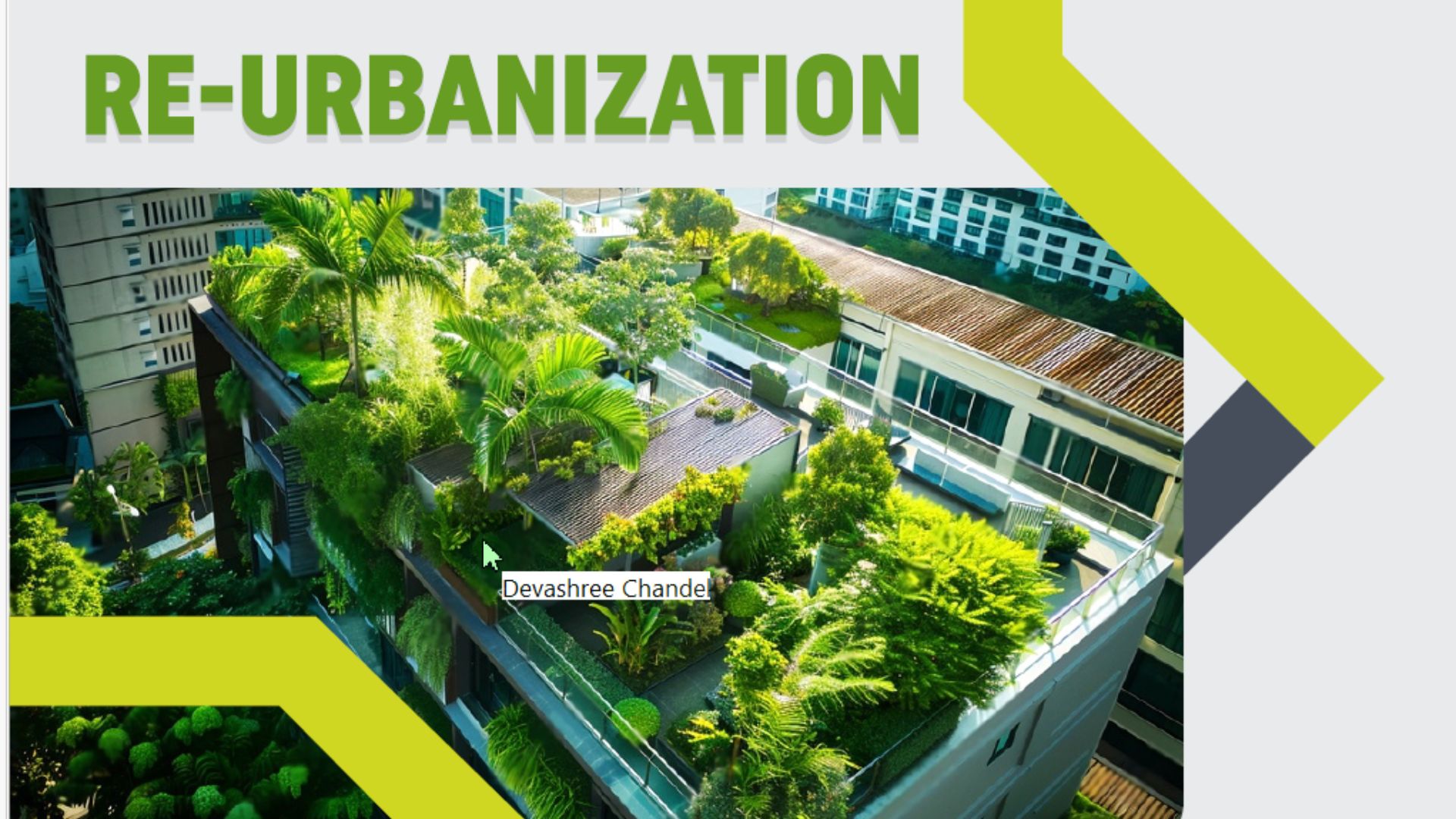
RE- URBANIZATION
Ancient town planning study has shown us how different civilizations had a deep evaluation of systematic layouts, designated areas based on their social structures and religious beliefs. Towns and Cities were planned around city palace or sometimes around a temple complex. All other ancillary amenities were provided in and around city. This paved way in promoting a harmonious relationship between urban life and nature and caring for the wellbeing of every individual.
Now analyzing the present day context we observe that, with the ever changing landscape of towns and cities, the amenities provided during all the preceding years, in its due course are slowly becoming redundant. These facilities were designed to fulfill the necessities for a certain period of time only. Adapting to new lifestyles, work styles of the new generations, compels us re arrange the amenities from a different perspective altogether.

The more we explore globally the more is the need to reset our living standards. What we perceive as a requirement of today may become inessential tomorrow. What we perceive as a luxury today may become a commodity of tomorrow. The transition will always be there, from roadside shopping to colossal malls or from street food to restaurants. The city or town will constantly be grappling to attain to a certain standard or bench mark set by and for our contemporary generation.
Apart from the conventional practices of providing gardens, open-spaces, public toilets or medical facilities, this new age people are looking for universal standards. A more neater and cleaner city, proper garbage disposal, all amenities and businesses within their reach, limited hawking zones, preserving the heritage, beautification of temple areas, river front development, pet and foster care, and pet friendly gardens, to name a few. These urban demands need to be addressed. There is an urgent need to revitalize existing areas.
This prompts an exigency to keep a continuous check on urbanization. To reinstate new demands and improvise on living standards, there is a need to make way for a rearrangement of amenities or we can say ‘Re-Urbanization’. This may not encompass a redevelopment process wholly, but may scrutinize areas to address to its newly raised urban expansion for larger area or city , town or villages as a whole. This re- urbanization should not only include smart tech and planning but make way for current adversaries of use of natural energies(solar, wind etc), and achieve sustainability through environment friendly practices.

This is undoubtedly people-centric approach. Its proposition is for the people and by the people. Their views and perceptions will matter the most. Awareness in bringing their ideas together can only promote in accelerating the idea of re- urbanization. Collaboration with the local government, sectors and civil society should also be interceded to help in shaping the cities for tomorrow. Requirements should be shared with the local chief of governance. Focus should be on creating a sustainable, inclusive, and resilient urban areas that address modern challenges like climate change, social equity, and technological advancements. It should be flexible enough to manage growth and improve on quality of life.
This will lead to rejuvenating and reviving of existing villages, cities and overhauling of overly used areas.
Effective re- urbanization will prove more important than ever as we and our cities navigate through 21st-century challenges, but relative measures have to take on much larger scale to make and feel the difference.
This re- urbanization will not only be the design of physical space but will go long way of building relationships, creating communities, and giving life to the human environment for the care and wellbeing of the future generations.
Ar. Rashmi Phulkar (Practicing architect, Vile Parle EAST)