— Dr. Gajendra Deoda
When we reflect upon the legacy, present condition, and future trajectory of Marathi media, it becomes evident that Marathi media has never been merely a vehicle for disseminating information. Marathi media has played a transformative role in shaping Maharashtra’s cultural identity, political consciousness, and social reform movements.
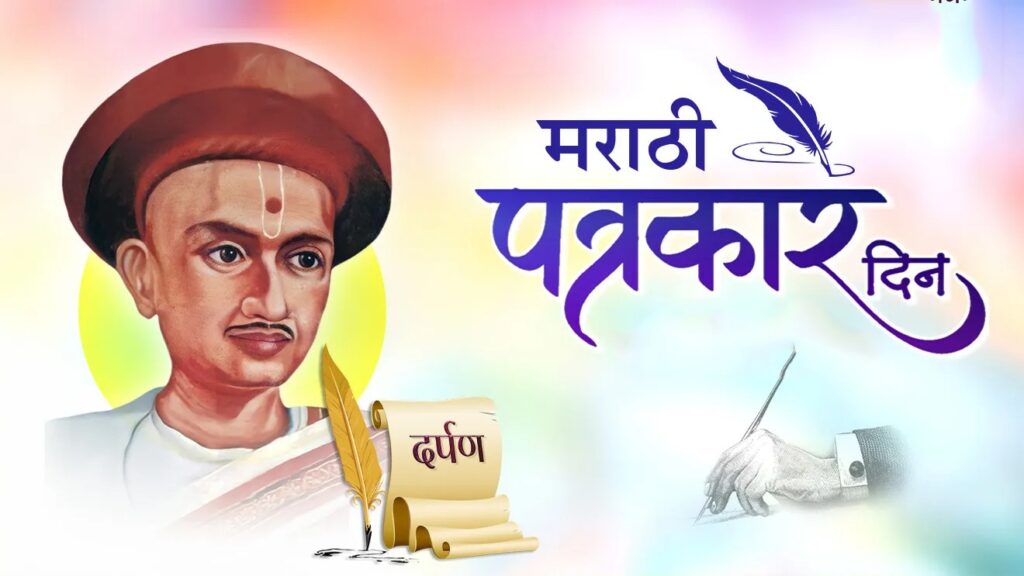
Marathi journalism began in 1832 with Darpan, the first Marathi newspaper, founded by Acharya Balshastri Jambhekar. Through this pioneering effort, he sowed the seeds of modern thought in the Marathi language. Later, in 1881, Bal Gangadhar Tilak used the newspaper Kesari as a powerful instrument to instill the message of Swarajya (self-rule) in the minds of the people. Newspapers such as Kaal, Nava Kaal, Sandesh, Prabhat, and Tarun Bharat played a vital role during the freedom struggle by awakening public consciousness and encouraging social reform. Through their writings, they championed the values of education, equality, and justice. Thus, the legacy of Marathi journalism has remained reformist, resilient, and transformative.
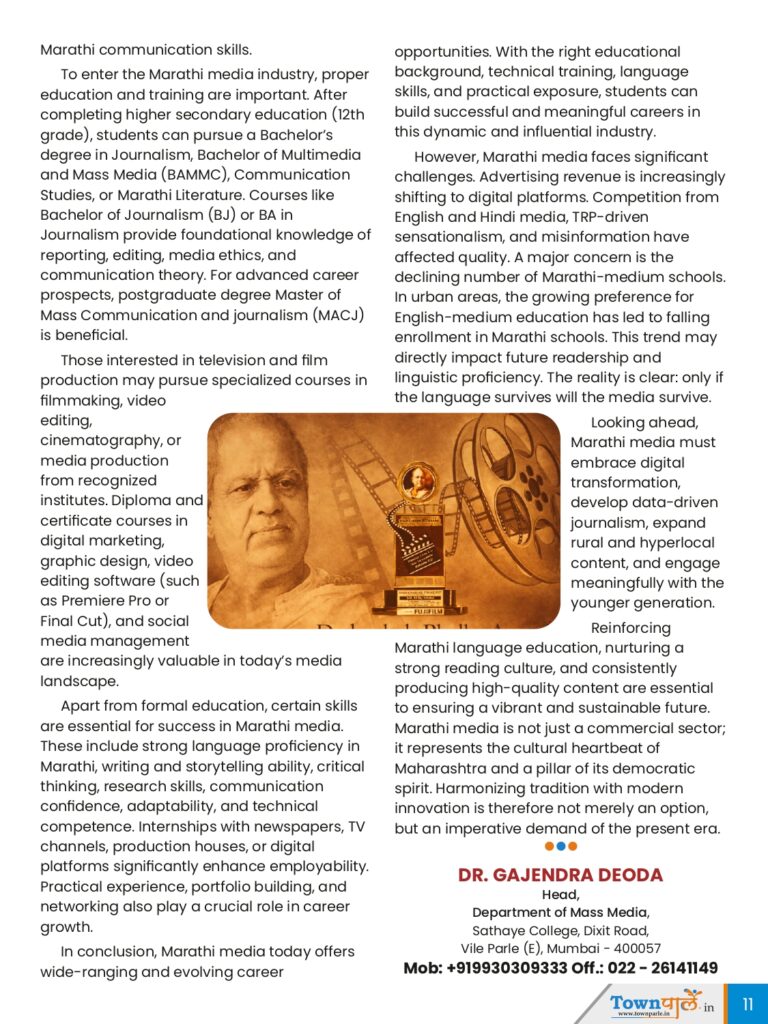
Marathi has also made invaluable contributions to cinema and broadcast media. Dadasaheb Phalke, revered as the father of Indian cinema, laid the foundation of the Indian film industry. Marathi films went on to portray social realities, rural life, historical heritage, and theatrical traditions with depth and authenticity. Influenced by theatre, folk art, and literature, Marathi cinema developed a distinct and respected identity.
After Independence, Marathi media expanded rapidly. It became clear that Marathi media formed the backbone of Maharashtra’s social, political, and cultural life. It not only reported news but also shaped public opinion, initiated debates on pressing social issues, and strengthened democratic values.
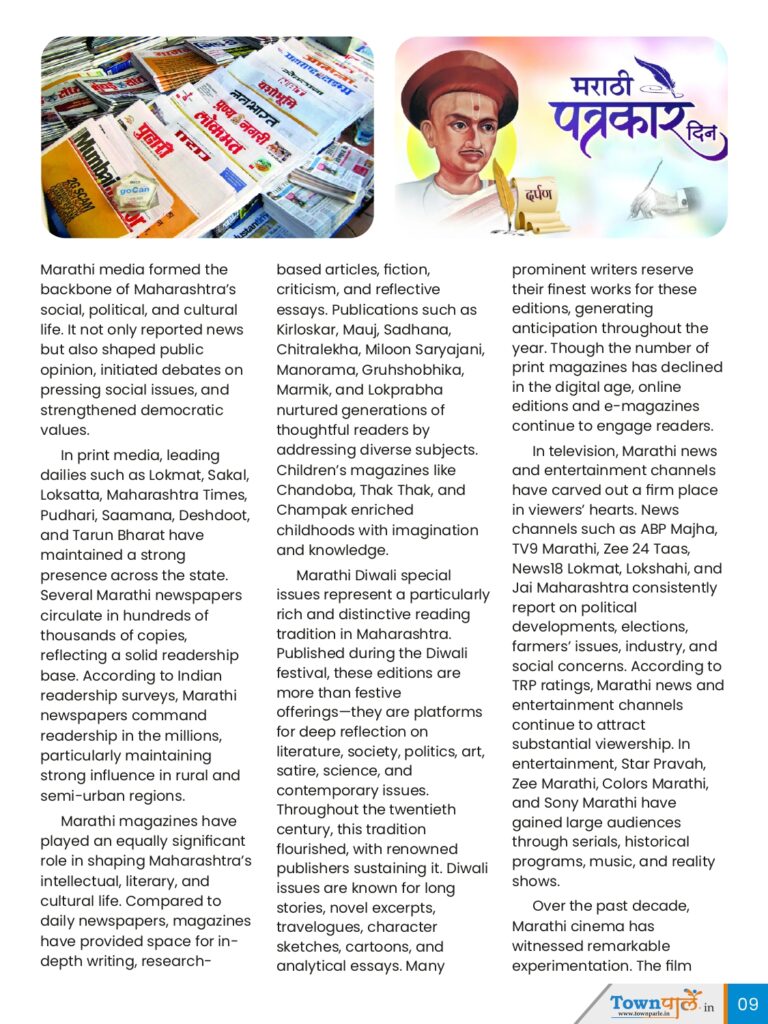
In print media, leading dailies such as Lokmat, Sakal, Loksatta, Maharashtra Times, Pudhari, Saamana, Deshdoot, and Tarun Bharat have maintained a strong presence across the state. Several Marathi newspapers circulate in hundreds of thousands of copies, reflecting a solid readership base. According to Indian readership surveys, Marathi newspapers command readership in the millions, particularly maintaining strong influence in rural and semi-urban regions.
Marathi magazines have played an equally significant role in shaping Maharashtra’s intellectual, literary, and cultural life. Compared to daily newspapers, magazines have provided space for in-depth writing, research-based articles, fiction, criticism, and reflective essays. Publications such as Kirloskar, Mauj, Sadhana, Chitralekha, Miloon Saryajani, Manorama, Gruhshobhika, Marmik, and Lokprabha nurtured generations of thoughtful readers by addressing diverse subjects. Children’s magazines like Chandoba, Thak Thak, and Champak enriched childhoods with imagination and knowledge.
Marathi Diwali special issues represent a particularly rich and distinctive reading tradition in Maharashtra. Published during the Diwali festival, these editions are more than festive offerings—they are platforms for deep reflection on literature, society, politics, art, satire, science, and contemporary issues. Throughout the twentieth century, this tradition flourished, with renowned publishers sustaining it. Diwali issues are known for long stories, novel excerpts, travelogues, character sketches, cartoons, and analytical essays. Many prominent writers reserve their finest works for these editions, generating anticipation throughout the year. Though the number of print magazines has declined in the digital age, online editions and e-magazines continue to engage readers.
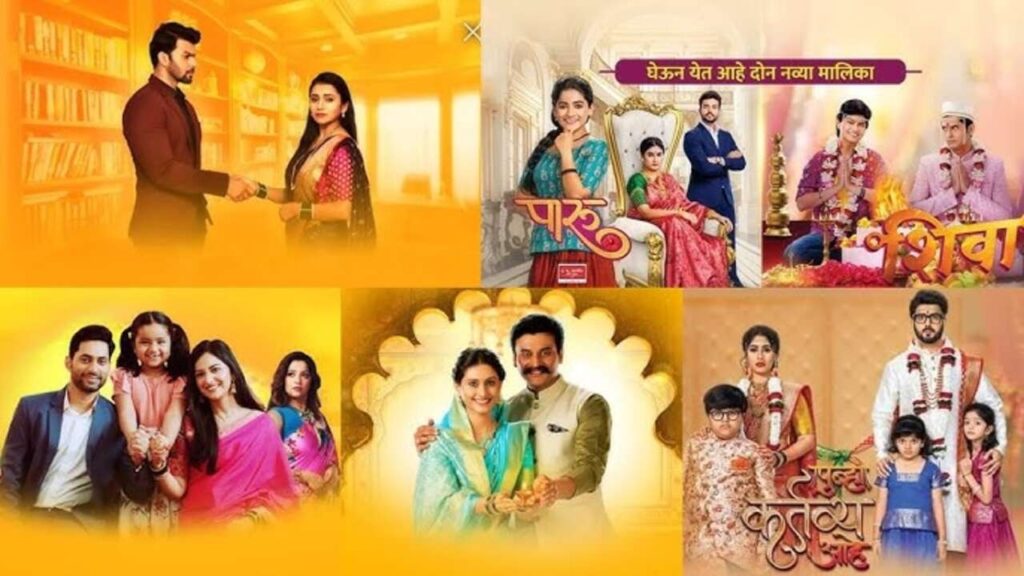
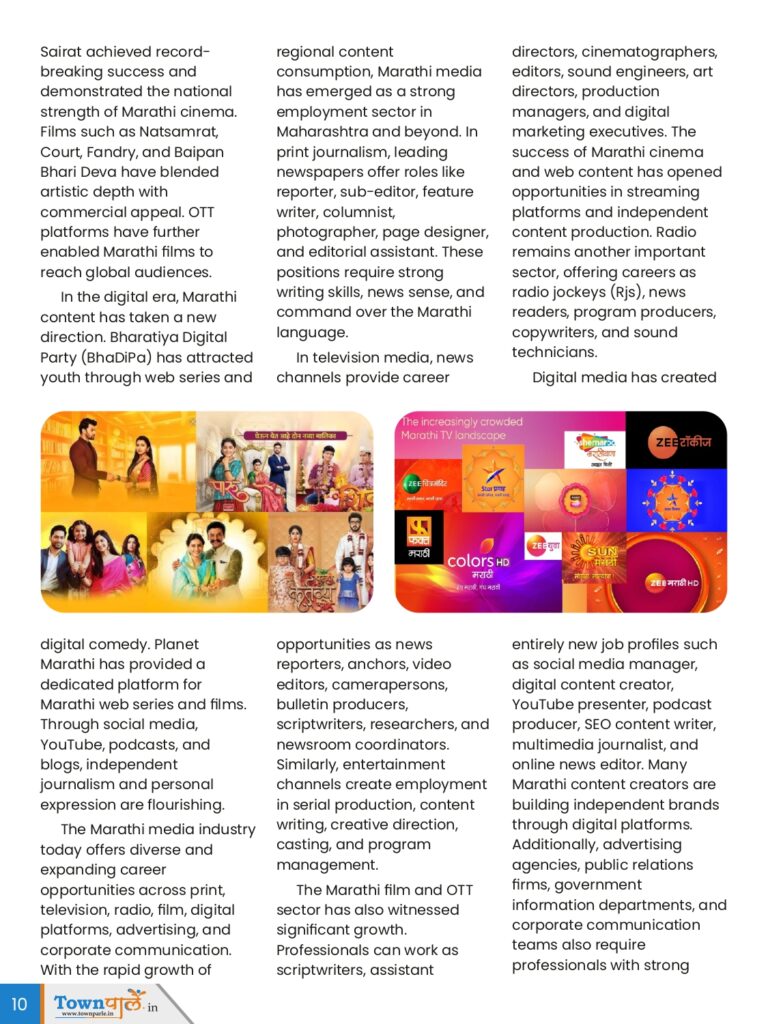
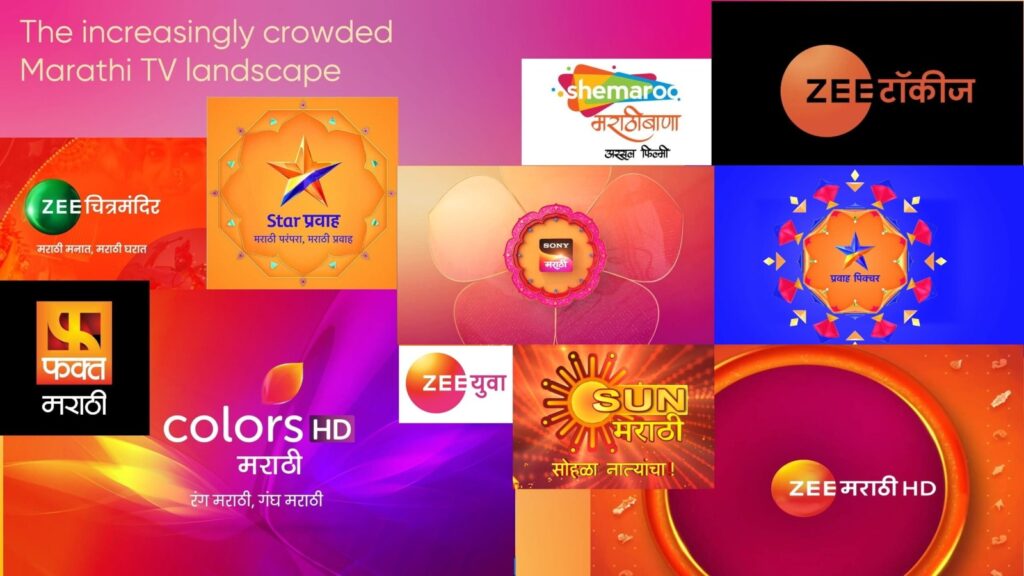
In television, Marathi news and entertainment channels have carved out a firm place in viewers’ hearts. News channels such as ABP Majha, TV9 Marathi, Zee 24 Taas, News18 Lokmat, Lokshahi, and Jai Maharashtra consistently report on political developments, elections, farmers’ issues, industry, and social concerns. According to TRP ratings, Marathi news and entertainment channels continue to attract substantial viewership. In entertainment, Star Pravah, Zee Marathi, Colors Marathi, and Sony Marathi have gained large audiences through serials, historical programs, music, and reality shows.
Over the past decade, Marathi cinema has witnessed remarkable experimentation. The film Sairat achieved record-breaking success and demonstrated the national strength of Marathi cinema. Films such as Natsamrat, Court, Fandry, and Baipan Bhari Deva have blended artistic depth with commercial appeal. OTT platforms have further enabled Marathi films to reach global audiences.
In the digital era, Marathi content has taken a new direction. Bharatiya Digital Party (BhaDiPa) has attracted youth through web series and digital comedy. Planet Marathi has provided a dedicated platform for Marathi web series and films. Through social media, YouTube, podcasts, and blogs, independent journalism and personal expression are flourishing.
The Marathi media industry today offers diverse and expanding career opportunities across print, television, radio, film, digital platforms, advertising, and corporate communication. With the rapid growth of regional content consumption, Marathi media has emerged as a strong employment sector in Maharashtra and beyond. In print journalism, leading newspapers offer roles like reporter, sub-editor, feature writer, columnist, photographer, page designer, and editorial assistant. These positions require strong writing skills, news sense, and command over the Marathi language.
In television media, news channels provide career opportunities as news reporters, anchors, video editors, camerapersons, bulletin producers, scriptwriters, researchers, and newsroom coordinators. Similarly, entertainment channels create employment in serial production, content writing, creative direction, casting, and program management.
The Marathi film and OTT sector has also witnessed significant growth. Professionals can work as scriptwriters, assistant directors, cinematographers, editors, sound engineers, art directors, production managers, and digital marketing executives. The success of Marathi cinema and web content has opened opportunities in streaming platforms and independent content production. Radio remains another important sector, offering careers as radio jockeys (RJs), news readers, program producers, copywriters, and sound technicians.
Digital media has created entirely new job profiles such as social media manager, digital content creator, YouTube presenter, podcast producer, SEO content writer, multimedia journalist, and online news editor. Many Marathi content creators are building independent brands through digital platforms. Additionally, advertising agencies, public relations firms, government information departments, and corporate communication teams also require professionals with strong Marathi communication skills.
To enter the Marathi media industry, proper education and training are important. After completing higher secondary education (12th grade), students can pursue a Bachelor’s degree in Journalism, Bachelor of Multimedia and Mass Media (BAMMC), Communication Studies, or Marathi Literature. Courses like Bachelor of Journalism (BJ) or BA in Journalism provide foundational knowledge of reporting, editing, media ethics, and communication theory. For advanced career prospects, postgraduate degree Master of Mass Communication and journalism (MACJ) is beneficial.
Those interested in television and film production may pursue specialized courses in filmmaking, video editing, cinematography, or media production from recognized institutes. Diploma and certificate courses in digital marketing, graphic design, video editing software (such as Premiere Pro or Final Cut), and social media management are increasingly valuable in today’s media landscape.
Apart from formal education, certain skills are essential for success in Marathi media. These include strong language proficiency in Marathi, writing and storytelling ability, critical thinking, research skills, communication confidence, adaptability, and technical competence. Internships with newspapers, TV channels, production houses, or digital platforms significantly enhance employability. Practical experience, portfolio building, and networking also play a crucial role in career growth.
In conclusion, Marathi media today offers wide-ranging and evolving career opportunities. With the right educational background, technical training, language skills, and practical exposure, students can build successful and meaningful careers in this dynamic and influential industry.
However, Marathi media faces significant challenges. Advertising revenue is increasingly shifting to digital platforms. Competition from English and Hindi media, TRP-driven sensationalism, and misinformation have affected quality. A major concern is the declining number of Marathi-medium schools. In urban areas, the growing preference for English-medium education has led to falling enrollment in Marathi schools. This trend may directly impact future readership and linguistic proficiency. The reality is clear: only if the language survives will the media survive.
Looking ahead, Marathi media must embrace digital transformation, develop data-driven journalism, expand rural and hyperlocal content, and engage meaningfully with the younger generation.
Reinforcing Marathi language education, nurturing a strong reading culture, and consistently producing high-quality content are essential to ensuring a vibrant and sustainable future. Marathi media is not just a commercial sector; it represents the cultural heartbeat of Maharashtra and a pillar of its democratic spirit. Harmonizing tradition with modern innovation is therefore not merely an option, but an imperative demand of the present era.