Why Muscles Go Into Spasm After 35 — And How Women Can Treat and Prevent It
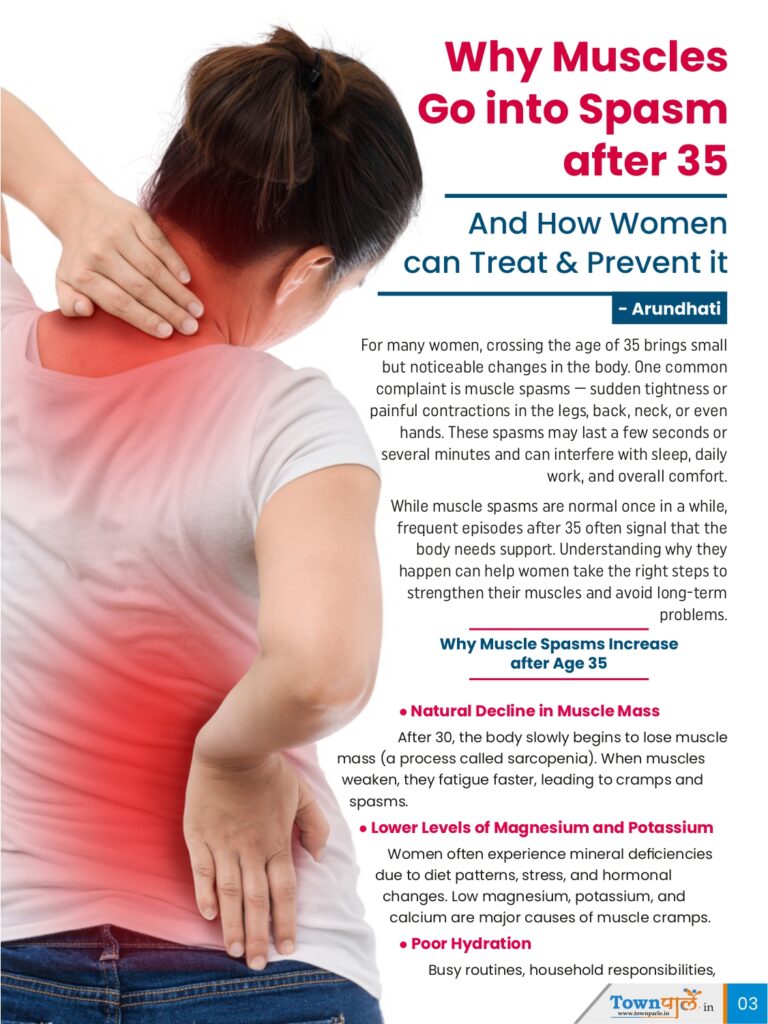
For many women, crossing the age of 35 brings small but noticeable changes in the body. One common complaint is muscle spasms — sudden tightness or painful contractions in the legs, back, neck, or even hands. These spasms may last a few seconds or several minutes and can interfere with sleep, daily work, and overall comfort.
For many women, crossing the age of 35 brings small but noticeable changes in the body. One common complaint is muscle spasms — sudden tightness or painful contractions in the legs, back, neck, or even hands. These spasms may last a few seconds or several minutes and can interfere with sleep, daily work, and overall comfort.
While muscle spasms are normal once in a while, frequent episodes after 35 often signal that the body needs support. Understanding why they happen can help women take the right steps to strengthen their muscles and avoid long-term problems.
Why Muscle Spasms Increase After Age 35
1. Natural Decline in Muscle Mass
After 30, the body slowly begins to lose muscle mass (a process called sarcopenia). When muscles weaken, they fatigue faster, leading to cramps and spasms.
2. Lower Levels of Magnesium and Potassium
Women often experience mineral deficiencies due to diet patterns, stress, and hormonal changes. Low magnesium, potassium, and calcium are major causes of muscle cramps.
3. Poor Hydration
Busy routines, household responsibilities, and long working hours cause many women to drink less water. Dehydration tightens the muscles and triggers spasms.
4. Hormonal Changes
Fluctuating estrogen levels after 35 affect blood circulation and muscle elasticity. This makes muscles more sensitive and prone to sudden contractions.
5. Desk Work and Lack of Movement
More women today work for long hours on laptops or phones. Sitting for long periods weakens the back, hip, and leg muscles, making spasms more common.
6. Stress and Poor Sleep
Stress creates tension in the neck, shoulders, and back. Lack of sleep reduces recovery time for muscles, leading to nighttime leg cramps.
7. Vitamin D Deficiency
Many women, especially in urban areas, get little sunlight. Low Vitamin D affects bone strength, muscle performance, and nerve function, increasing spasms.
– Arundhati