JULY – VALUE Understanding Worth Beyond Price
A Vile Parle (East) Story – The Joshi Family (Season 2026)
By Prakash Joshi (Ex-Banker & Freelance Educator)
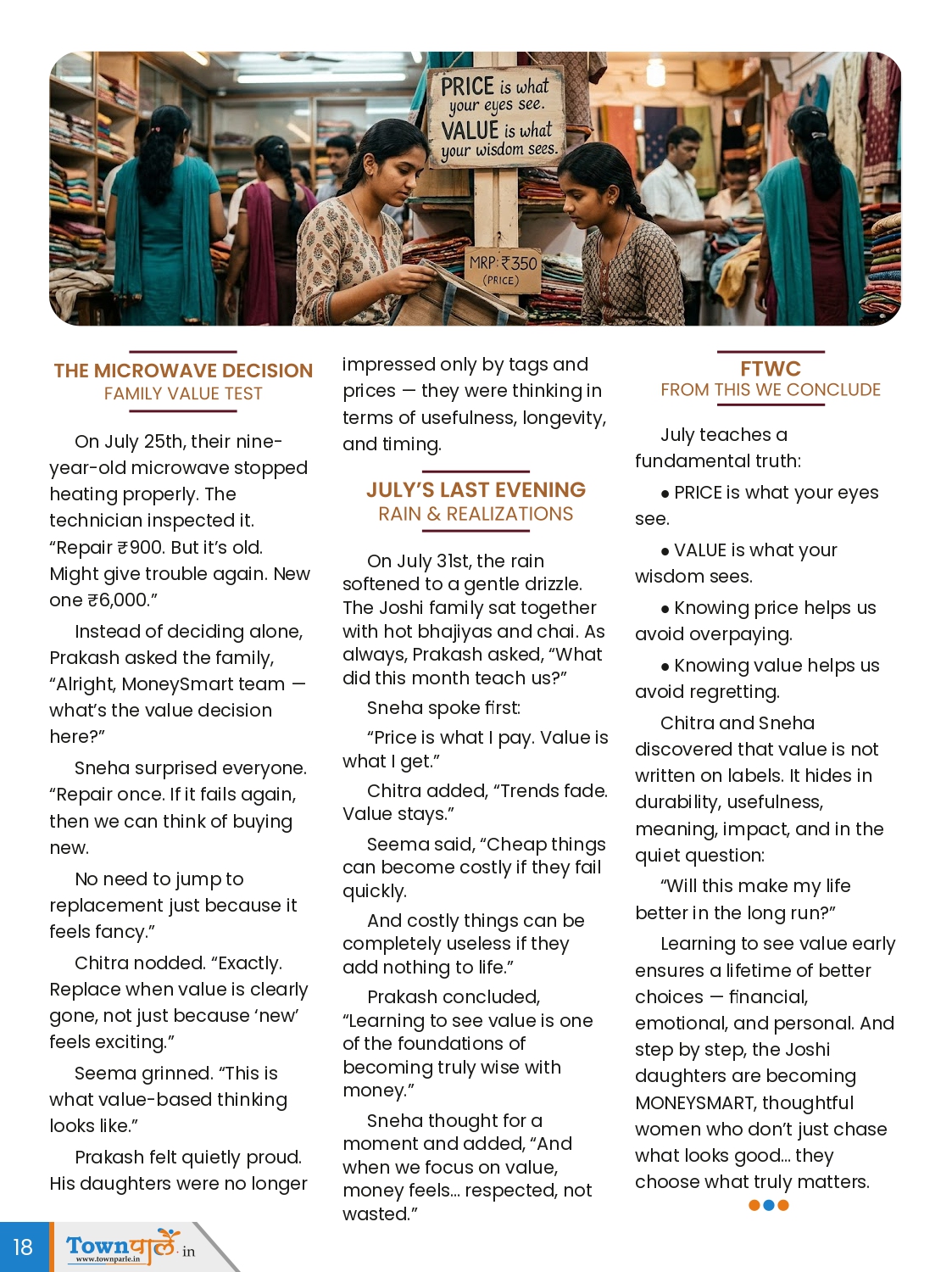
July teaches the daughters that everything has a price, but not everything has value. Price is a number. Value is the impact on your life. Wise people learn to see value first and price later.
Brief Introduction
July in Mumbai means full monsoon mood: loud skies, flooded corners, traffic moving slower than government files, and the irresistible smell of roasted bhutta on street corners.
Umbrellas flip inside out, trains are late, slippers slip, and every second person begins conversations with, “Kitni baarish ho rahi hai na!”
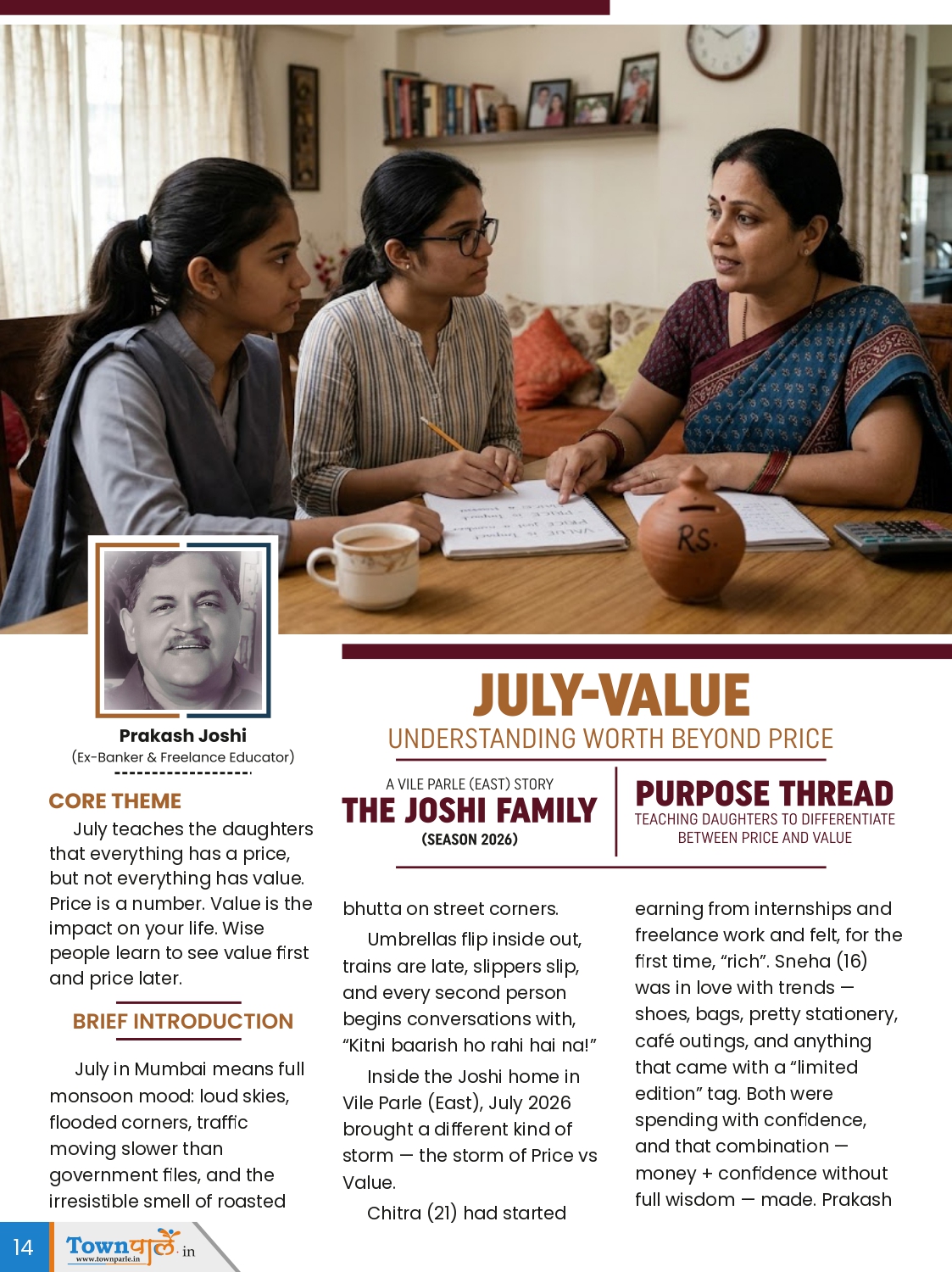
Inside the Joshi home in Vile Parle (East), July 2026 brought a different kind of storm—the storm of Price vs Value.
Chitra (21) had started earning from internships and freelance work and felt, for the first time, “rich.” Sneha (16) was in love with trends—shoes, bags, pretty stationery, café outings, and anything that came with a “limited edition” tag. Both were spending with confidence, and that combination of money and confidence without full wisdom made Prakash and Seema alert.
The girls had already learned about awareness, emotions, discipline, savings and goals. But one vital filter was still missing in their decision-making—how to recognise true value.
That lesson arrived through a pair of shoes, a dead umbrella, a kind old lady, and the world’s most overpriced milkshake.
Sneha’s ₹2,950 Shoes
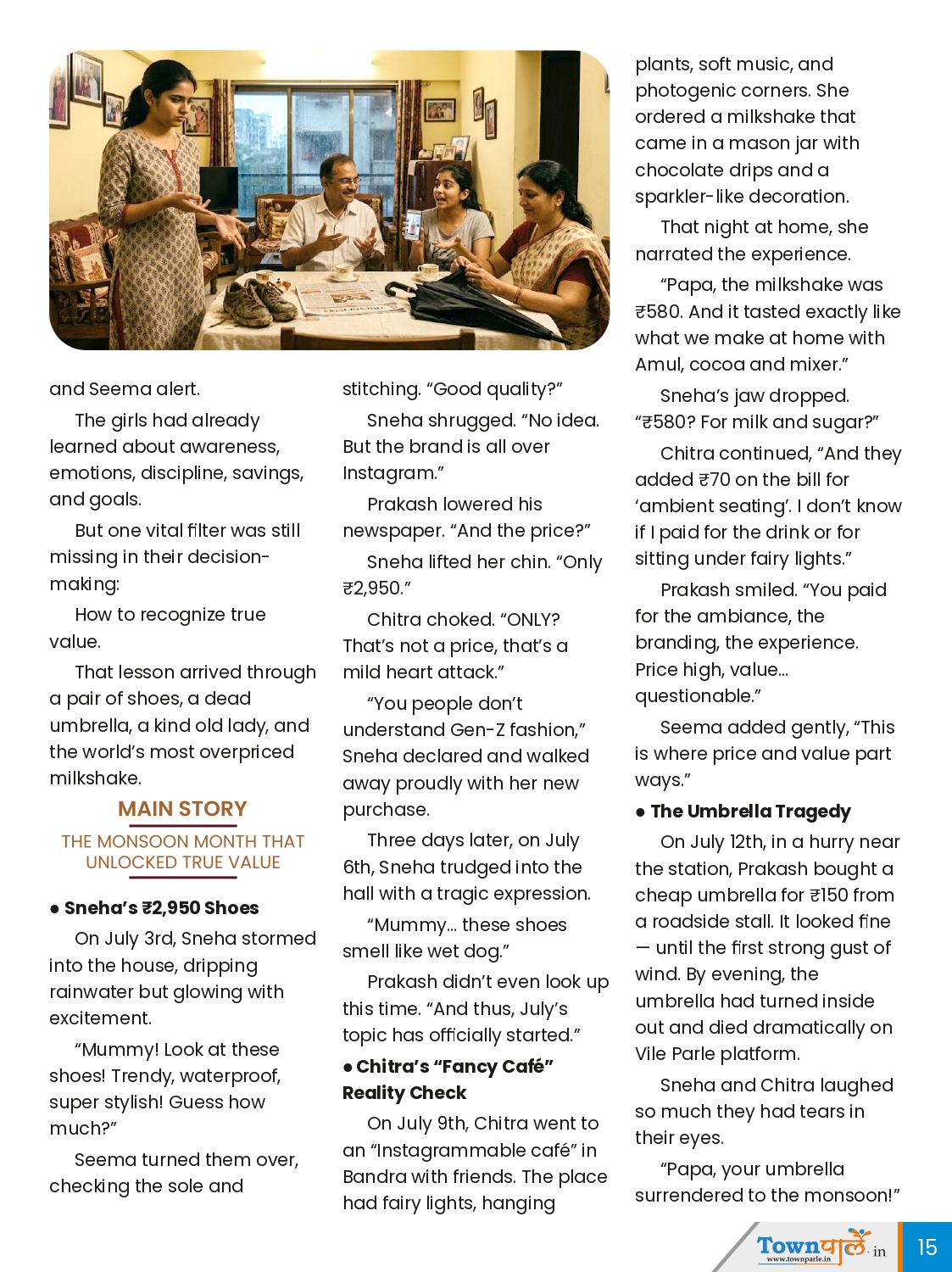
On July 3rd, Sneha excitedly showed off her new waterproof shoes costing ₹2,950. When Seema asked about the quality, Sneha admitted she had no idea but bought them because the brand was popular on Instagram.
Three days later, the shoes had started smelling badly after the rains.
Prakash smiled and said, “And thus, July’s topic has officially started.”
Chitra’s Fancy Café Reality Check
A few days later, Chitra visited a trendy café in Bandra and ordered a milkshake costing ₹580.
When she returned home, she admitted it tasted exactly like the milkshake made at home. She even realised she had paid extra for the ambience.
Prakash explained that sometimes we pay for branding and experience, but the actual value may not justify the price.
The Umbrella Tragedy
Prakash bought a ₹150 umbrella from a roadside stall.
It survived only one day before turning inside out during heavy rain.
He smiled and said,
“Cheap things can become expensive when they fail at the wrong time.”
Seema added,
“And expensive things become foolish when they give no real value.”
That evening, Prakash decided it was time to teach his daughters about value.
The Family Value Box Session
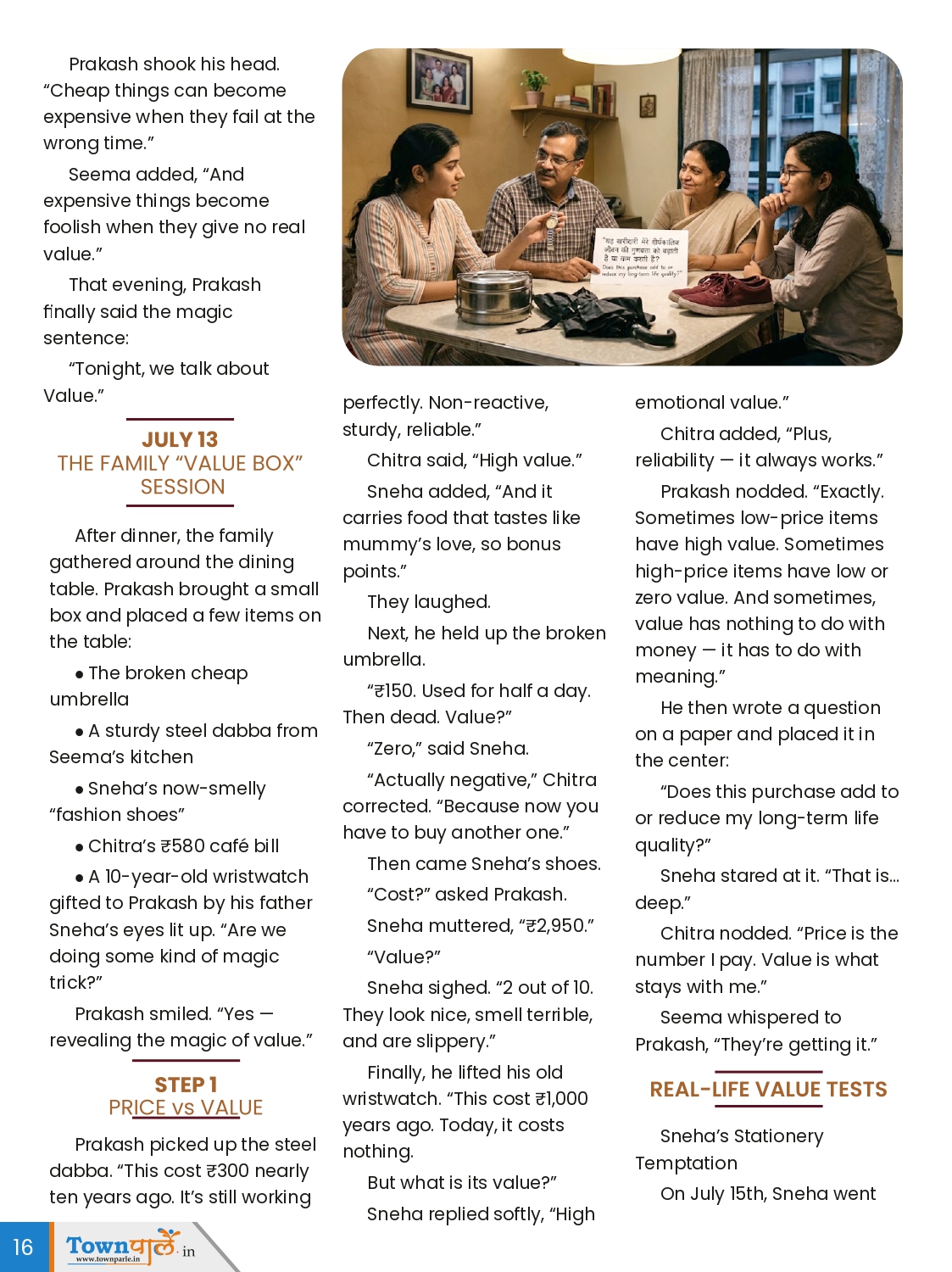
After dinner, Prakash placed five items on the table:
The broken umbrella
A steel dabba from the kitchen
Sneha’s shoes
Chitra’s café bill
His old wristwatch gifted by his father
Using these simple objects, he explained that price and value are not the same.
The steel dabba had lasted for almost ten years.
The umbrella failed in one day.
The expensive shoes looked stylish but performed poorly.
His old wristwatch had little monetary value but immense emotional value.
He then wrote one question on a piece of paper:
“Does this purchase add to or reduce my long-term life quality?”
That question changed the way both daughters started thinking.
Real-Life Value Tests
Sneha’s Stationery Purchase
Sneha almost bought a glitter pen worth ₹180.
Just before paying, she asked herself,
“Will this improve my life in the long run?”
The answer was no.
She put it back.
Instead of buying for excitement, she chose value.
Chitra’s Online Course
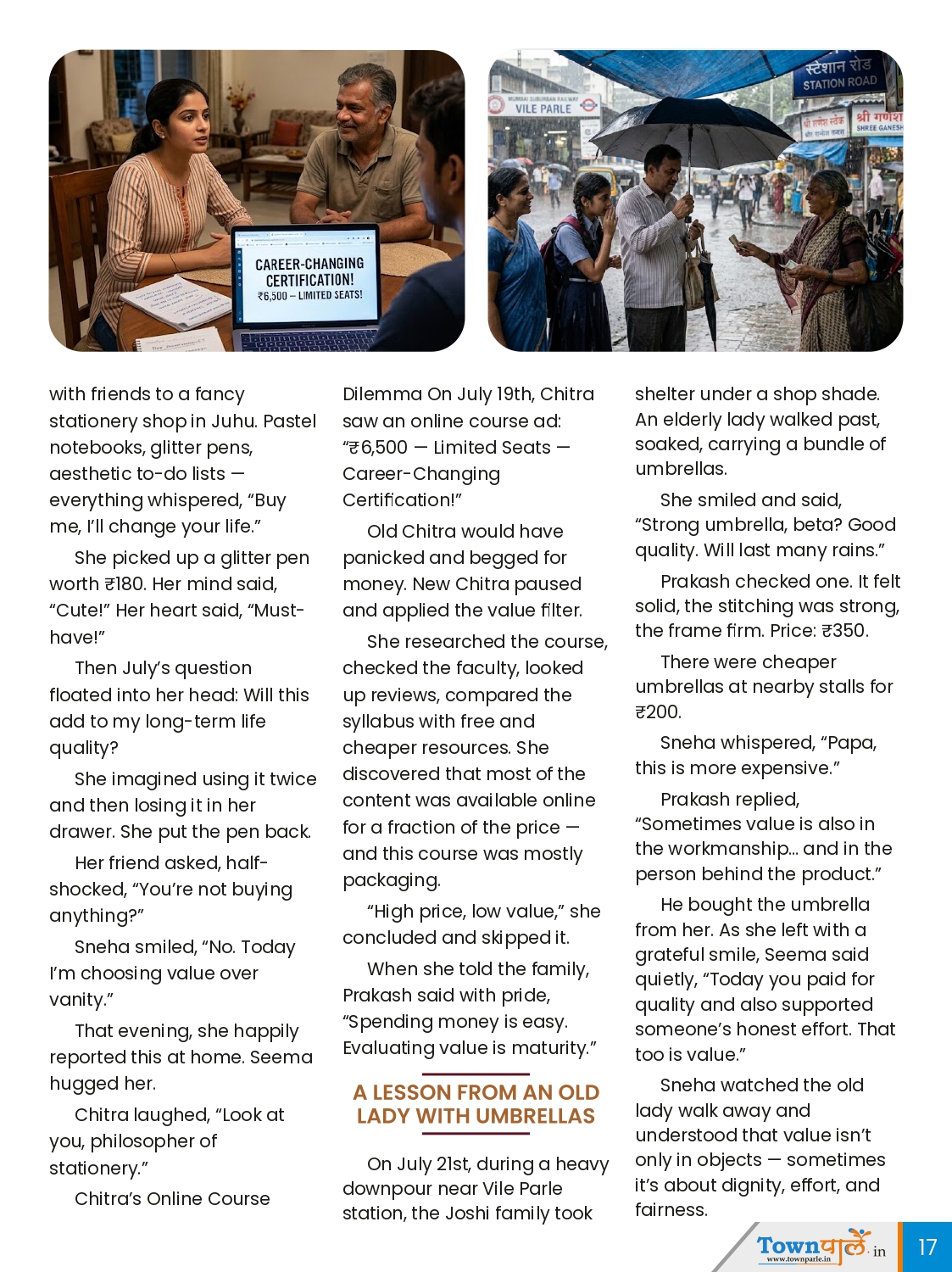
Chitra found an online course costing ₹6,500.
Instead of immediately enrolling, she researched the faculty, reviews and course content.
She discovered that most of the material was already available online at a much lower cost.
She skipped the course.
Prakash proudly said,
“Spending money is easy. Evaluating value is maturity.”
A Lesson from an Old Lady Selling Umbrellas
One rainy evening near Vile Parle Station, the family met an elderly woman selling umbrellas.
Her umbrella cost ₹350, while nearby stalls sold them for ₹200.
Prakash chose hers because it was better made.
He also wanted to support her honest work.
Sneha realised that value isn’t always found in products.
Sometimes it lies in dignity, effort and fairness.
The Microwave Decision
Later that month, the family’s microwave stopped working.
Repair would cost ₹900.
Buying a new one would cost ₹6,000.
Instead of replacing it immediately, the family decided to repair it first.
They realised replacement should happen only when the value is truly gone—not simply because something new looks attractive.
July’s Last Evening
On the last day of July, the family sat together enjoying hot bhajiyas and tea.
Prakash asked,
“What did this month teach us?”
Sneha replied,
“Price is what I pay. Value is what I get.”
Chitra added,
“Trends fade. Value stays.”
Seema reminded them that cheap things can become expensive if they fail quickly, while costly things can be useless if they add nothing meaningful to life.
Prakash concluded,
“Learning to recognise value is one of the foundations of becoming truly wise with money.”
Conclusion
July teaches us a simple but powerful lesson:
Price is what your eyes see.
Value is what your wisdom sees.
Knowing the price helps us avoid overpaying.
Knowing the value helps us avoid regretting.
True value is not written on price tags.
It is found in durability, usefulness, meaning, impact and in asking one simple question:
“Will this make my life better in the long run?”
By learning this lesson early, Chitra and Sneha are becoming thoughtful, MoneySmart young women who don’t simply chase what looks attractive—they choose what truly matters.