
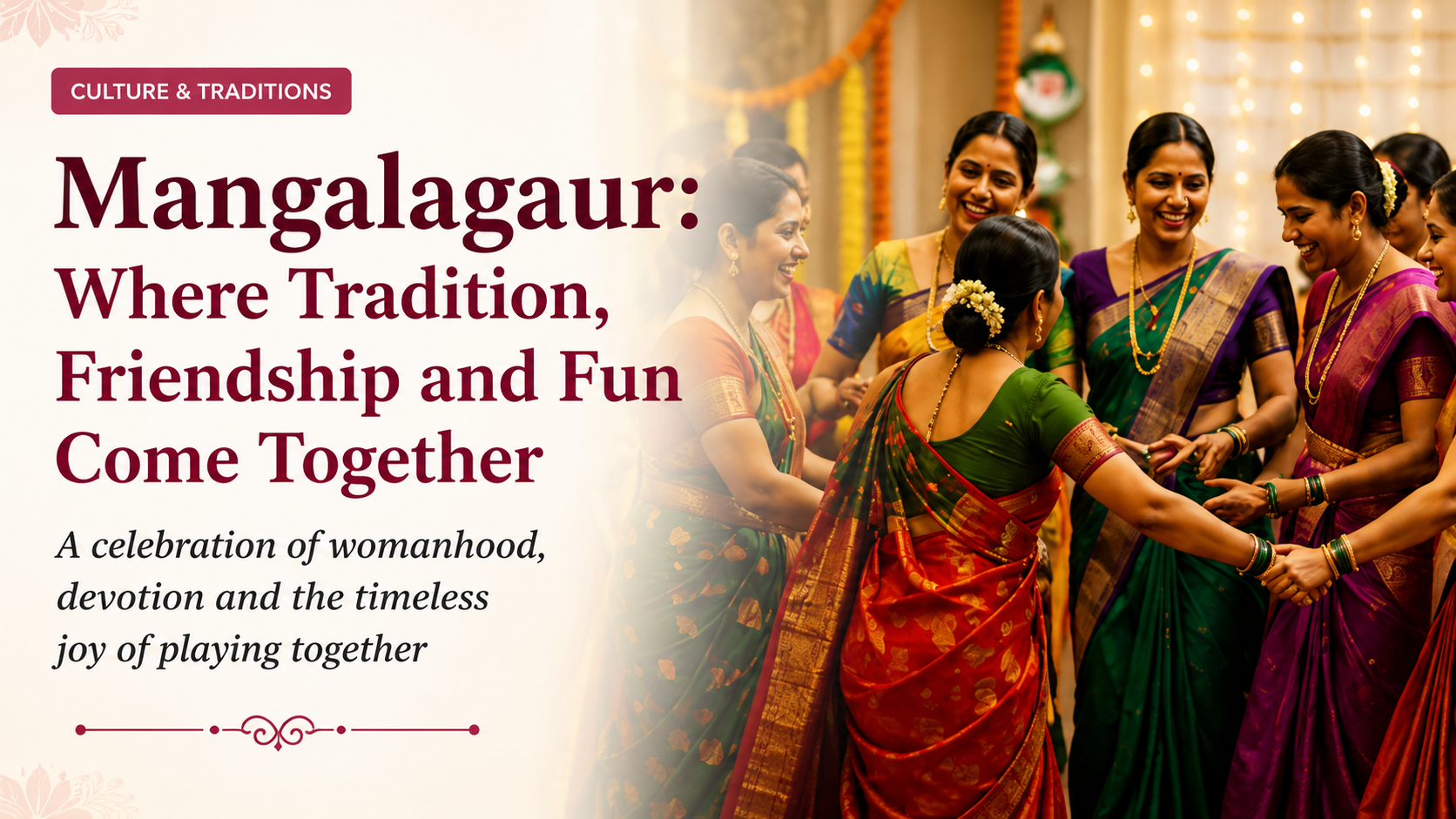
Mangalagaur: Where Tradition, Friendship and Fun Come Together
Mangalagaur: Where Tradition, Friendship and Fun Come Together
A celebration of womanhood, devotion and the timeless joy of playing together
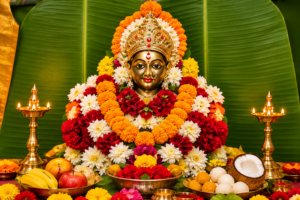 As soon as Shravan arrives, Maharashtra comes alive with the sounds of devotional songs, traditional rituals and festive gatherings. Among the many traditions associated with this auspicious month, Mangalagaur holds a special place in the hearts of Maharashtrian women.
For generations, Mangalagaur has been much more than a religious ritual. It is an occasion for women to dress in their finest traditional attire, meet friends and family, sing, dance, laugh and keep alive a beautiful cultural tradition.
Even today, in homes across Maharashtra—and here in Vile Parle—women can be seen celebrating Mangalagaur with the same enthusiasm. A newly married woman traditionally celebrates Mangalagaur during the first five years of her marriage, making these Tuesdays particularly special.
Dressed in a traditional nine-yard sari, adorned with a bindi, mangalsutra, bangles and toe rings, with mehendi on her hands and a gajra in her hair, she becomes part of a celebration that beautifully connects the present with generations past.
And then comes the most exciting part—the Mangalagaur games!
The Tradition Behind Mangalagaur
Mangalagaur is traditionally associated with the worship of Goddess Parvati (Gauri), along with Lord Shiva. The couple is regarded as an ideal symbol of love, companionship and marital devotion.
Traditionally, married women observe the Mangalagaur puja on every Tuesday of Shravan during the first five years after marriage. The puja is followed by the reading of the Mangalagaur story, which narrates the devotion of a woman named Sushila and the blessings she receives from Goddess Mangalagaur.
The story symbolises faith, devotion and the blessings of an enduring married life. After the story is read, women offer rice to the goddess and complete the traditional rituals.
The puja itself is elaborate, with flowers, durva, leaves, betel nuts, fruits, coconuts, turmeric, kumkum, lamps, incense and various offerings. In many homes, a haldi-kumkum ceremony is also organised in the evening, bringing together women from the neighbourhood, family and friends.
The Night of Mangalagaur: Games, Songs and Laughter
If the puja represents the spiritual side of Mangalagaur, the jagar represents its joyful spirit.
After dinner, women gather together and play traditional games late into the night. These are not simply games for entertainment—they are an important part of Maharashtra’s folk culture and were traditionally a wonderful way for women to socialise, exercise and enjoy themselves.
The list is long: Phugadi, Zimma, Pinga, Ghatod, Phere, Gof, Soop, Ghagar Ghumu De, Khurchi Ka Mirchi, Kis Bai Kis, Kombda, Kikich Paan, Dinda, Supari and Kachkirda, among others.
Many of these games require coordination, rhythm and physical movement. The result is an evening filled with music, laughter, friendly competition and plenty of energy.
For women who may otherwise have had very little opportunity to gather socially, these traditional games created a space where they could simply be themselves.
The Songs That Bring Everyone Together
No Mangalagaur celebration feels complete without its traditional songs.
Songs such as “Pinga Ga Pori Pinga,” “Aamba Pikto Ras Gaalto,” “Ek Limbu Zhelu Bai,” and “Nach Ga Ghuma, Kashi Mi Nachu?” instantly bring back memories for anyone who has grown up around Maharashtrian traditions.
The songs are playful, rhythmic and often filled with humour. They talk about jewellery, clothes, family relationships, husbands, brothers, sisters and everyday life.
“Nach Ga Ghuma, Kashi Mi Nachu?” is perhaps one of the most recognisable songs associated with this tradition. The playful lyrics imagine a woman wondering how she can dance when the jeweller hasn’t arrived with her toe rings, the tailor hasn’t brought her blouse or the bangle seller hasn’t brought her bangles.
Then there is the energetic Pinga, where women dance in pairs, matching their movements to the rhythm of the song.
These songs have survived because they are not merely songs—they are pieces of living folklore passed from one generation to another.
More Than Just a Religious Tradition
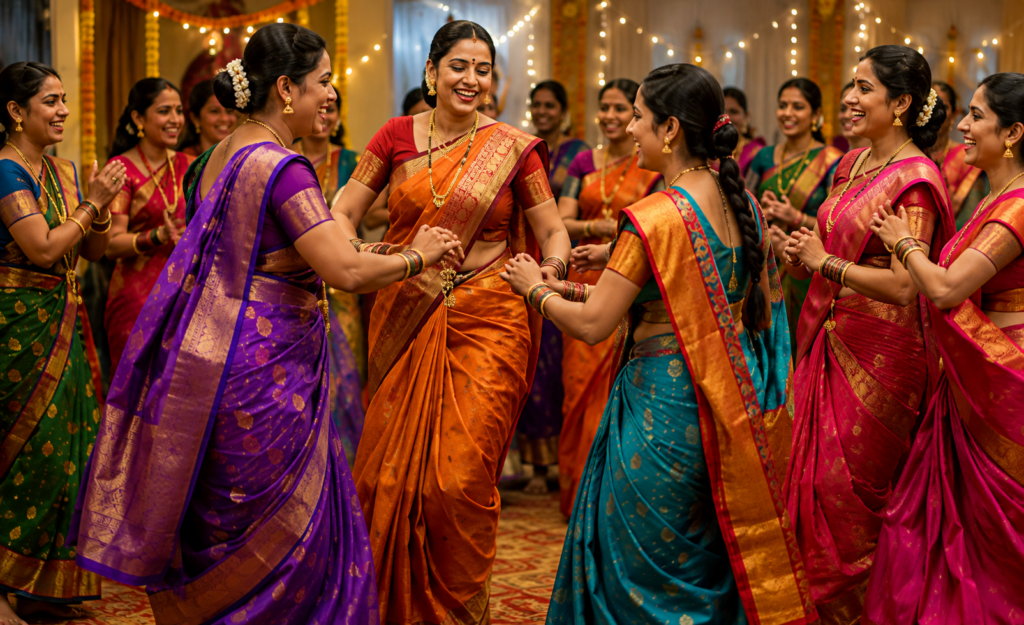
What makes Mangalagaur special is that it brings together several aspects of life—faith, friendship, music, dance, exercise, humour and community.
The traditional games themselves can be viewed as an excellent form of physical activity. Phugadi, Pinga, Zimma and other games involve movement, balance, coordination and stamina. At the same time, the laughter and camaraderie create an atmosphere of happiness and togetherness.
In today’s world, where social interactions increasingly happen through phones and social media, there is something wonderfully refreshing about a tradition that asks people to put their phones aside, hold hands, sing together and simply enjoy one another’s company.
Mangalagaur in Modern Mumbai
Mangalagaur has changed with the times, but it has certainly not disappeared.
Today, women may gather in apartment complexes, community halls, offices or social clubs instead of traditional courtyards. Many groups organise Mangalagaur evenings where women dress traditionally and perform games and dances in a carefully planned programme.
Even women who describe themselves as thoroughly modern often make an effort to celebrate their first Mangalagaur after marriage.
And in a neighbourhood like Vile Parle, where old traditions and modern lifestyles exist side by side, Mangalagaur continues to find its place.
There are several groups in Parle that organise Mangalagaur games with great enthusiasm. For many women, these gatherings are also an opportunity to reconnect with friends, meet new people and introduce younger generations to traditions they may otherwise know only through stories.
Keeping the Tradition Alive
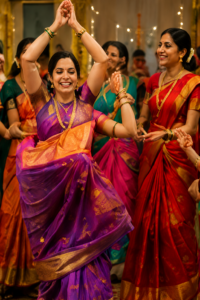 Traditions survive when they are experienced—not simply remembered.
A child watching her mother dress in a nine-yard sari, listening to the sound of bangles, watching women play Zimma or Pinga and hearing the familiar words of “Nach Ga Ghuma” is witnessing something much more valuable than a festival.
She is witnessing a piece of Maharashtra’s cultural heritage being passed on.
Mangalagaur reminds us that celebrations do not always need elaborate arrangements or expensive decorations. Sometimes, all that is needed is a group of women, a few traditional songs, a little space and the willingness to laugh, dance and celebrate together.
Perhaps that is why, year after year, Shravan brings back the familiar sound:
“Pinga ga pori, pinga…”
And somewhere in Parle, the circle begins again.
Mangalagaur Aarti
The traditional celebration also includes the Shri Mangalagauri Aarti, beginning with the familiar invocation:
“Jai Devi Mangalagauri,
Ovaalin soniya taatin…”
The aarti describes the beauty of Goddess Mangalagaur, the traditional offerings, flowers, lamps, ornaments and the devotion with which women worship her.
It is this combination of devotion, tradition and celebration that gives Mangalagaur its unique place in Maharashtrian culture.
A Tradition Worth Celebrating
Mangalagaur is not simply about observing a ritual because it has always been done. It is about preserving a sense of community, celebrating womanhood and keeping alive the songs, games and stories that form part of Maharashtra’s cultural memory.
As the generations change, the way Mangalagaur is celebrated may continue to evolve. But as long as women gather, sing, dance, laugh and pass these traditions on, the spirit of Mangalagaur will remain alive.
Do you remember playing Mangalagaur games in your childhood or after your marriage? Does your society or group in Vile Parle still organise Mangalagaur? Share your memories, photographs or traditional games with us—we would love to hear from Parlekars and add more of these beautiful traditions to our community archive.
– Bhargavi S.