
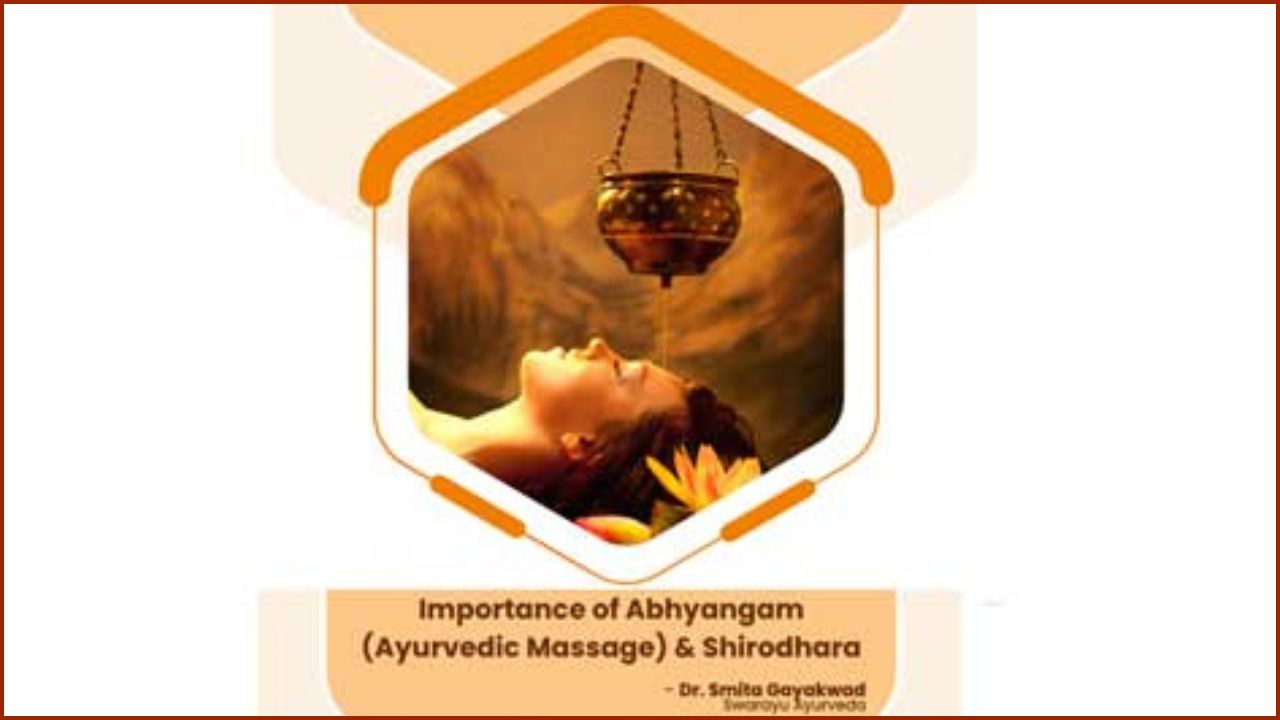
Importance of Abhyangam (Ayurvedic massage )and Shirodhara
Importance of Abhyangam (Ayurvedic massage )and Shirodhara
By Dr. Smita Gaikwad, Swarayu Ayurveda Clinic and Panchakarma Centre, Vile Parle (East), Mumbai
Ayurveda, the ancient Indian system of medicine, emphasizes the harmony of body (sharira), mind (manas), and spirit (atma). Among its many therapies, Abhyangam (Ayurvedic oil massage) and Shirodhara (oil-pouring therapy) are two of the most powerful treatments for relaxation, healing, and preventive care.
Abhyangam – Ayurvedic Oil Massage
Origin and Meaning
The word Abhyangam is derived from Sanskrit: Abhi (towards) and Anga (body parts). It involves the application of warm, medicated herbal oils with rhythmic massage strokes. Classical texts like Charaka Samhita and Ashtanga Hridaya even recommend Abhyangam as part of daily routine (Dinacharya) for health and longevity.
Procedure
- Selection of Oil – Based on dosha balance or health needs:
- Vata imbalance → Sesame oil, Ashwagandha oil
- Pitta imbalance → Coconut oil, Brahmi oil
- Kapha imbalance → Mustard oil, Trikatu oil
- Massage Technique – Long rhythmic strokes, circular motions on joints, gentle muscular pressure.
- Duration – 45 to 60 minutes, often with two therapists working in synchrony.
- Post-Massage Care – A steam bath (Swedana) or warm shower to help oils penetrate and toxins flush out.
Benefits
- Improves circulation and lymphatic flow
- Relieves stiffness, strengthens muscles and joints
- Delays ageing, nourishes skin
- Calms the nervous system, improves sleep
- Promotes detoxification
Indications
- Stress, fatigue, weakness
- Arthritis, muscle pain, stiffness
- Dry skin, premature ageing
- Neurological concerns like insomnia or neuropathy
Shirodhara – The Flow of Bliss
Origin and Meaning
Shiro means “head,” and Dhara means “continuous flow.” In this therapy, a steady stream of warm liquid is poured on the forehead, especially over the Ajna Chakra (third-eye region). It is considered one of Ayurveda’s finest treatments for calming the mind.
Procedure
- Preparation – Patient lies on a wooden droni (Ayurvedic table).
- Choice of Liquid – Depends on condition:
- Medicated oils (Taila Dhara) – stress, insomnia, headaches
- Buttermilk (Takra Dhara) – psoriasis, Pitta disorders
- Milk (Ksheera Dhara) – nourishment, relaxation
- Herbal decoctions (Kashaya Dhara) – specific health needs
- Process – Warm liquid flows in a continuous stream from a suspended vessel. The liquid is gently reheated and reused.
- Duration – 30 to 45 minutes.
Benefits
- Deep relaxation of the nervous system
- Reduces anxiety, depression, irritability
- Improves concentration, memory, and clarity
- Regulates sleep cycles, helpful in insomnia
- Beneficial in migraines, hypertension, and stress-related issues
Indications
- Stress, tension, burnout
- Sleep disorders, anxiety, depression
- Chronic headaches, migraines
- Neurological support in conditions like Parkinson’s
- Skin and scalp issues such as psoriasis or premature greying
The Synergy of Abhyangam and Shirodhara
When practiced together, these therapies work holistically:
- Abhyangam nurtures the body – improving circulation, flexibility, and strength.
- Shirodhara calms the mind – enhancing clarity, emotional balance, and deep rest.
Together, they rejuvenate both physical and mental health.
Scientific Relevance
Modern research supports their effectiveness:
- Abhyangam reduces cortisol (stress hormone), stimulates the parasympathetic nervous system, and boosts blood circulation.
- Shirodhara balances brain waves, induces deep relaxation, and regulates sleep.
Abhyangam and Shirodhara are timeless Ayurvedic practices that offer natural ways to detoxify the body, calm the mind, and restore balance. In today’s fast-paced lifestyle, these therapies can be powerful tools for stress management and holistic well-being when practiced under the guidance of a qualified Ayurvedic physician.
Dr. Smita Gaikwad
Swarayu Ayurveda Clinic and Panchakarma Centre
Vile Parle (East), Mumbai – 400057.