Iron Deficiency After 40: Why Every Woman Should Pay Attention
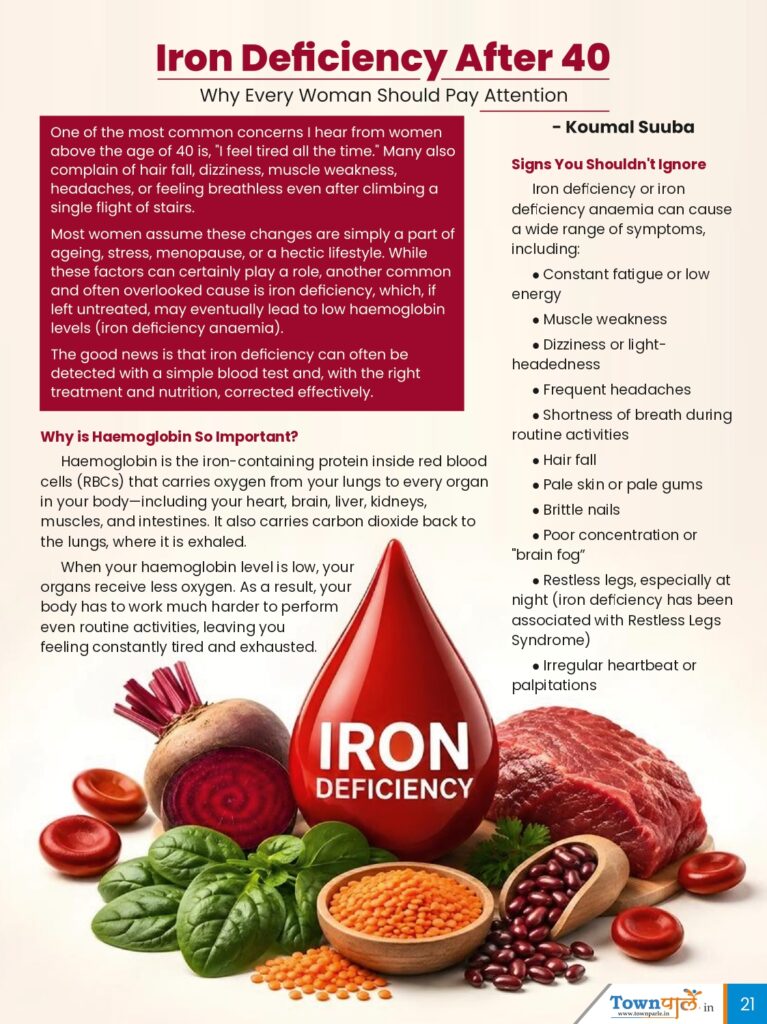
One of the most common concerns I hear from women above the age of 40 is, “I feel tired all the time.” Many also complain of hair fall, dizziness, muscle weakness, headaches, or feeling breathless even after climbing a single flight of stairs.
Most women assume these changes are simply a part of ageing, stress, menopause, or a hectic lifestyle. While these factors can certainly play a role, another common and often overlooked cause is iron deficiency, which, if left untreated, may eventually lead to low haemoglobin levels (iron deficiency anaemia).
The good news is that iron deficiency can often be detected with a simple blood test and, with the right treatment and nutrition, corrected effectively.
Why is Haemoglobin So Important?
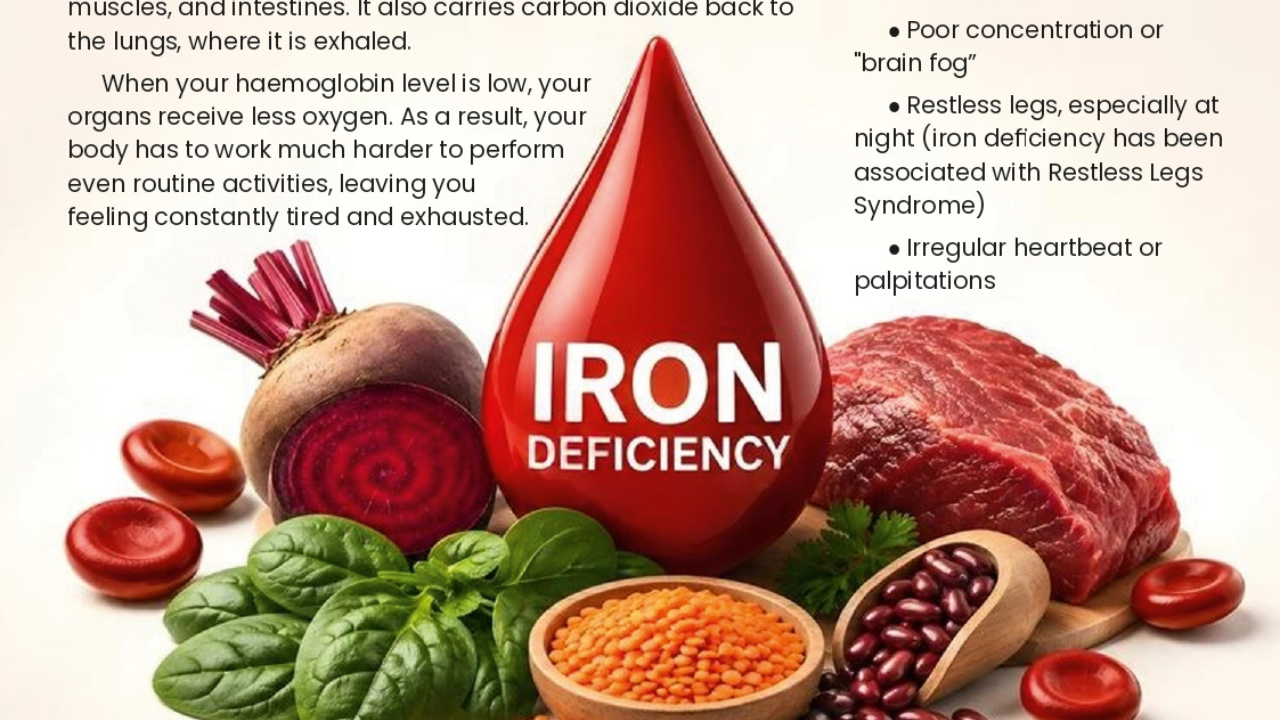
Haemoglobin is the iron-containing protein inside red blood cells (RBCs) that carries oxygen from your lungs to every organ in your body—including your heart, brain, liver, kidneys, muscles, and intestines. It also carries carbon dioxide back to the lungs, where it is exhaled.
When your haemoglobin level is low, your organs receive less oxygen. As a result, your body has to work much harder to perform even routine activities, leaving you feeling constantly tired and exhausted.
Signs You Shouldn’t Ignore
Iron deficiency or iron deficiency anaemia can cause a wide range of symptoms, including:
- Constant fatigue or low energy
- Muscle weakness
- Dizziness or light-headedness
- Frequent headaches
- Shortness of breath during routine activities
- Hair fall
- Pale skin or pale gums
- Brittle nails
- Poor concentration or “brain fog”
- Restless legs, especially at night (iron deficiency has been associated with Restless Legs Syndrome)
- Irregular heartbeat or palpitations
If you notice several of these symptoms together, it is advisable to consult your doctor rather than taking iron supplements on your own.
Which Tests Should You Ask For?
A proper evaluation helps identify whether your symptoms are due to iron deficiency or another nutritional problem.
Your doctor may recommend:
- Complete Blood Count (CBC) – to assess haemoglobin levels and red blood cell indices.
- Serum Ferritin – one of the most important tests to assess your body’s iron stores. Ferritin levels often become low before haemoglobin levels decrease.
- Serum Iron
- Total Iron Binding Capacity (TIBC)
- Transferrin Saturation
- Vitamin B12 – deficiency can also contribute to fatigue, weakness, numbness, and neurological symptoms.
- Vitamin D – low levels may contribute to muscle weakness and fatigue.
If you have heavy menstrual bleeding, digestive problems, or persistent low haemoglobin despite treatment, your doctor may recommend additional investigations to identify the underlying cause.
Building Healthy Haemoglobin Naturally
A balanced diet plays a significant role in maintaining healthy haemoglobin levels.
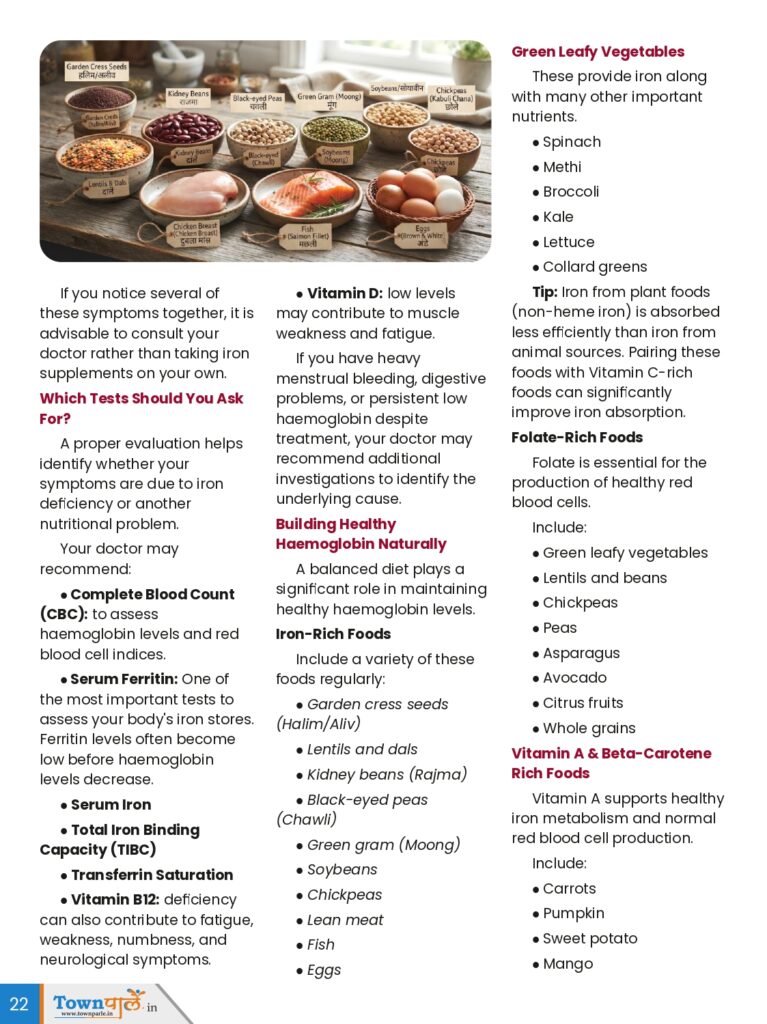
Iron-Rich Foods
Include a variety of these foods regularly:
- Garden cress seeds (Halim/Aliv)
- Lentils and dals
- Kidney beans (Rajma)
- Black-eyed peas (Chawli)
- Green gram (Moong)
- Soybeans
- Chickpeas
- Lean meat
- Fish
- Eggs
Green Leafy Vegetables
These provide iron along with many other important nutrients.
- Spinach
- Methi
- Broccoli
- Kale
- Lettuce
- Collard greens
Tip: Iron from plant foods (non-heme iron) is absorbed less efficiently than iron from animal sources. Pairing these foods with Vitamin C-rich foods can significantly improve iron absorption.
Folate-Rich Foods
Folate is essential for the production of healthy red blood cells.
Include:
- Green leafy vegetables
- Lentils and beans
- Chickpeas
- Peas
- Asparagus
- Avocado
- Citrus fruits
- Whole grains
Vitamin A & Beta-Carotene Rich Foods
Vitamin A supports healthy iron metabolism and normal red blood cell production.
Include:
- Carrots
- Pumpkin
- Sweet potato
- Mango
- Cantaloupe (Muskmelon)
- Apricots
Vitamin C – Your Iron Absorption Booster
Vitamin C significantly improves the absorption of iron from plant-based foods.
Include:
- Amla
- Oranges
- Sweet lime
- Lemons
- Guava
- Tomatoes
- Capsicum
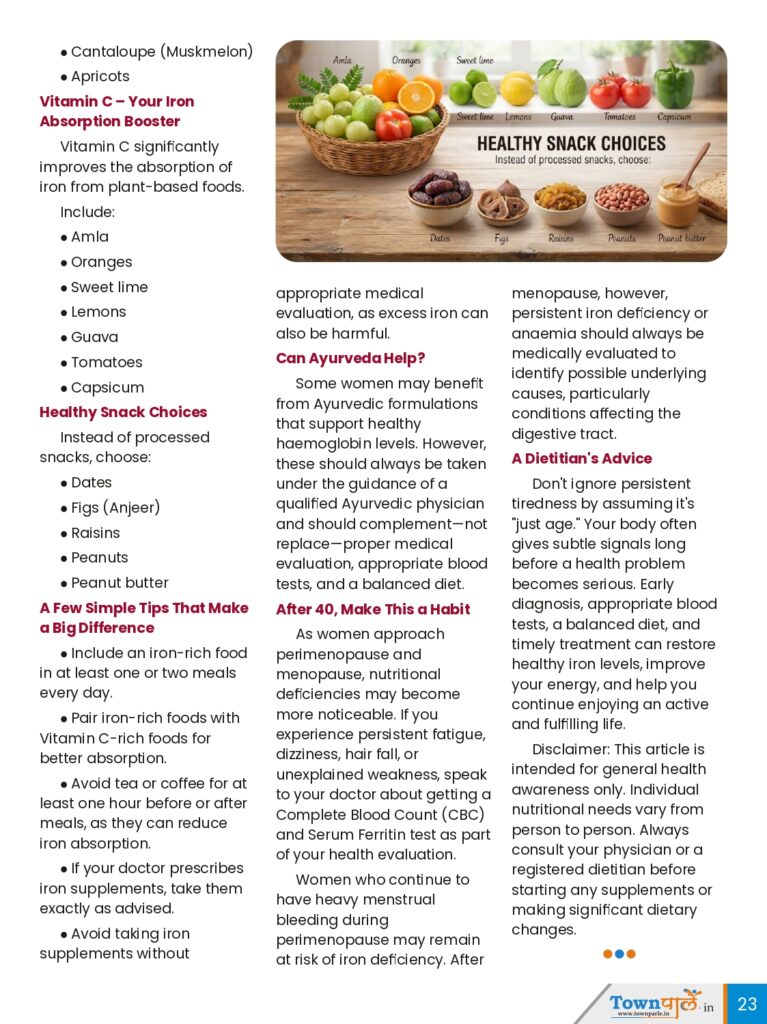
Healthy Snack Choices
Instead of processed snacks, choose:
- Dates
- Figs (Anjeer)
- Raisins
- Peanuts
- Peanut butter
A Few Simple Tips That Make a Big Difference
- Include an iron-rich food in at least one or two meals every day.
- Pair iron-rich foods with Vitamin C-rich foods for better absorption.
- Avoid tea or coffee for at least one hour before or after meals, as they can reduce iron absorption.
- If your doctor prescribes iron supplements, take them exactly as advised.
- Avoid taking iron supplements without appropriate medical evaluation, as excess iron can also be harmful.
Can Ayurveda Help?
Some women may benefit from Ayurvedic formulations that support healthy haemoglobin levels. However, these should always be taken under the guidance of a qualified Ayurvedic physician and should complement—not replace—proper medical evaluation, appropriate blood tests, and a balanced diet.
After 40, Make This a Habit
As women approach perimenopause and menopause, nutritional deficiencies may become more noticeable. If you experience persistent fatigue, dizziness, hair fall, or unexplained weakness, speak to your doctor about getting a Complete Blood Count (CBC) and Serum Ferritin test as part of your health evaluation.
Women who continue to have heavy menstrual bleeding during perimenopause may remain at risk of iron deficiency. After menopause, however, persistent iron deficiency or anaemia should always be medically evaluated to identify possible underlying causes, particularly conditions affecting the digestive tract.
A Dietitian’s Advice
Don’t ignore persistent tiredness by assuming it’s “just age.” Your body often gives subtle signals long before a health problem becomes serious. Early diagnosis, appropriate blood tests, a balanced diet, and timely treatment can restore healthy iron levels, improve your energy, and help you continue enjoying an active and fulfilling life.
Disclaimer: This article is intended for general health awareness only. Individual nutritional needs vary from person to person. Always consult your physician or a registered dietitian before starting any supplements or making significant dietary changes.