
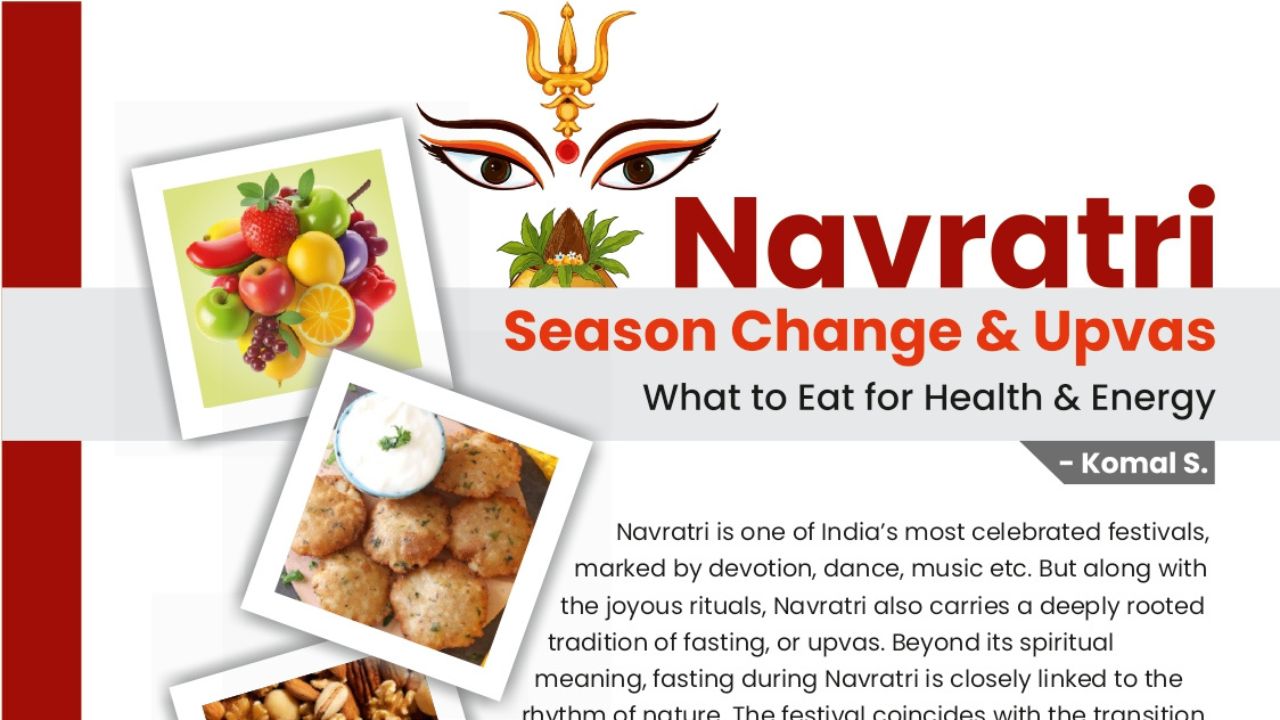
Navratri, Season Change & Upvas: What to Eat for Health and Energy
Navratri is one of India’s most celebrated festivals, marked by devotion, dance, music etc. But along with the joyous rituals, Navratri also carries a deeply rooted tradition of fasting, or upvas. Beyond its spiritual meaning, fasting during Navratri is closely linked to the rhythm of nature. The festival coincides with the transition from monsoon to winter—a time when our body naturally becomes more vulnerable and requires extra care.
The change of season often weakens immunity, slows digestion, and leaves us more prone to ailments like coughs, colds, and acidity. This is where the wisdom of fasting comes in. By shifting to lighter, sattvic foods, our system gets a much-needed break while receiving nourishment that supports immunity and energy.
The Deeper Purpose of Upvas
For many, fasting is thought of simply as avoiding regular grains or skipping meals. In truth, it is designed as a way to detoxify the body, reset digestion, and restore balance to both body and mind. When done thoughtfully, upvas not only purifies but also energizes, allowing us to participate in the festivities with vitality.
Healthy Foods to Include in Navratri Upvas
Here are some special fasting foods and their nutritional benefits:
- Fruits (Banana, Papaya, Apple, Pomegranate): Rich in vitamins, antioxidants, and natural sugars for instant energy.
- Dry Fruits & Nuts (Almonds, Walnuts, Dates, Figs): Provide healthy fats, protein, and iron; good for stamina.
- Rajgira (Amaranth): High in protein, calcium, and iron; great for bone and muscle strength.
- Samak Rice (Barnyard Millet): Gluten-free, light on the stomach, rich in fiber and magnesium.
- Singhara & Kuttu Flour: Good source of complex carbs and protein; help keep you full for longer.
- Sweet Potato & Potato: Packed with Vitamin A (sweet potato) and potassium; give steady energy release.
- Dairy (Milk, Paneer, Curd, Buttermilk): Provide calcium, protein, and probiotics for gut health.
- Seeds (Pumpkin, Flax, Sunflower): Contain omega-3 fatty acids, zinc, and fiber to boost immunity.
Foods Best Avoided
The benefits of fasting are easily lost when replaced with overly processed or fried options. Deep-fried snacks, although popular, often cause heaviness and acidity. Excessive tea or coffee can dehydrate the body, while packaged “fasting chips” and sugary sweets add calories without real nourishment. Choosing moderation and balance ensures that the fast remains health-enhancing rather than taxing.
The Importance of Hydration
Hydration plays a key role during fasting. Regular water intake helps flush toxins, while natural drinks like coconut water and lemon water restore electrolytes. Herbal teas made with tulsi, ginger, or cinnamon not only aid digestion but also strengthen immunity.
A Balanced Approach to Fasting
To truly benefit from Navratri upvas, it is best to eat small, frequent meals rather than remaining hungry for long stretches. Cooking methods like roasting, boiling, or light sautéing preserve nutrients and prevent digestive discomfort. Adequate rest, stress management, and festive physical activity such as garba or dandiya keep both the body and spirit active.
Navratri fasting, at its core, is not about deprivation. It is a practice of cleansing, rejuvenation, and balance. By embracing wholesome foods and mindful eating, we can align with the deeper essence of the season—emerging stronger, calmer, and more energized to celebrate the Goddess with joy and devotion.
– Komal S.