
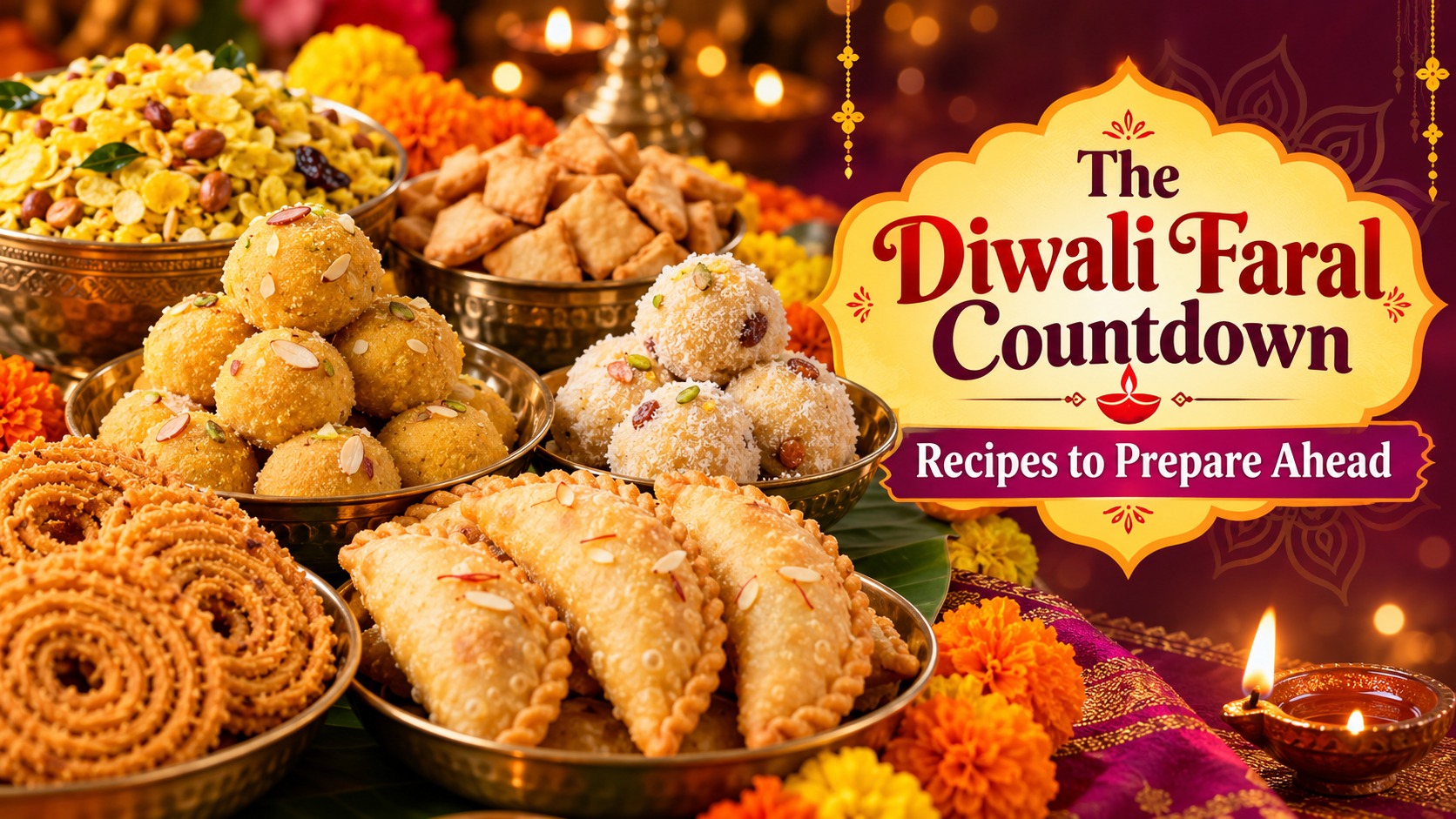
The Diwali Faral Countdown: Recipes to Prepare Ahead
Diwali may be celebrated in November, but the preparations begin well before the festival! In many Maharashtrian households, the excitement of Diwali faral starts nearly 10 days in advance, with shopping for ingredients, planning the menu and preparing much-loved sweets and savouries.
As our November issue of TownParle.in will be a special Diwali edition, we bring you this collection of traditional faral recipes a little early in our October issue, giving you enough time to plan and prepare for the festive season.
From golden besan laddoos and crispy shankarpalis to aromatic chivda, crunchy chaklis and delicious karanjis, these homemade delicacies are an inseparable part of a Maharashtrian Diwali. More than just festive treats, they bring back cherished memories, preserve family traditions and fill our homes with the irresistible aroma of celebration.
So, as you begin getting ready for Diwali, let these classic recipes inspire your kitchen preparations. After all, the joy of the festival begins long before Diwali day—with the familiar flavours of homemade faral, the warmth of family and the happiness of sharing.
Let the preparations begin, and bring home the delicious taste of tradition this Diwali!
1. Besan Laddoos – A Classic Festive Favourite
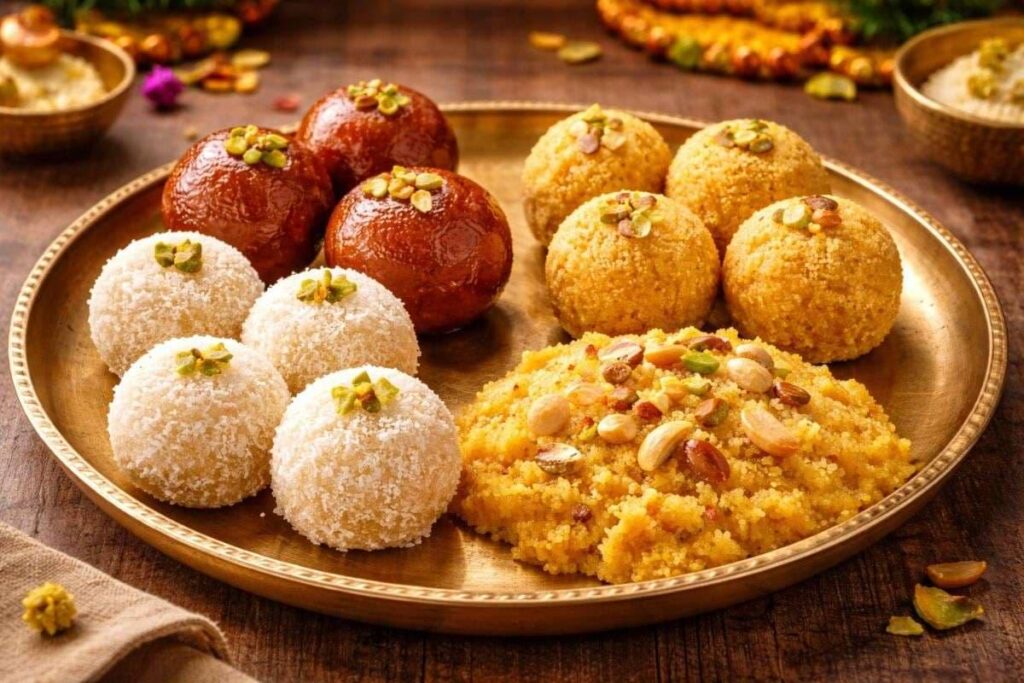
Few sweets can match the rich, nutty aroma of besan slowly roasted in ghee. These golden laddoos are a Diwali staple, loved for their melt-in-the-mouth texture and delicate cardamom flavour.
Ingredients
- 2 cups gram flour (besan)
- ½ cup fine semolina (rava)
- 2½ cups powdered sugar
- Ghee, as required
- Cardamom powder
- Chopped cashews and almonds
- Raisins
Method
- Heat ghee in a heavy-bottomed pan and roast the besan over a low flame until it turns aromatic and develops a rich, golden colour.
- In a separate pan, roast the semolina until lightly golden.
- Combine the roasted besan and semolina, mix well and allow the mixture to cool until slightly warm.
- Add powdered sugar, cardamom powder, chopped nuts and raisins.
- Mix thoroughly until all the ingredients are evenly incorporated.
- While the mixture is still slightly warm, shape it into small, firm laddoos using your palms.
Festive tip: Slow roasting is the secret to flavourful besan laddoos. Take your time with this step to achieve that unmistakable homemade taste.
2. Quick Rava Laddoos – Simple, Sweet and Delicious
Looking for a relatively quick festive sweet? These rava laddoos combine roasted semolina, fresh coconut, milk and nuts to create a soft, aromatic treat that is perfect for sharing.
Ingredients
- 1–1½ cups fine semolina (rava)
- 1 cup freshly grated coconut
- 1–2½ cups sugar, according to taste
- 1 cup milk with cream (malai)
- 1 teaspoon nutmeg powder
- Chopped cashews
- Raisins
Method
- Dry-roast the semolina in a pan over a low flame until it releases a pleasant aroma. Do not allow it to brown excessively.
- Add the grated coconut, sugar and milk with cream. Mix well.
- Cook over a low flame, stirring frequently to prevent the mixture from sticking to the pan.
- As the mixture thickens, add nutmeg powder, chopped cashews and raisins.
- Mix well and continue cooking until the mixture comes together.
- Allow it to cool until comfortable to handle, then shape into laddoos.
Festive tip: Adjust the sugar to your preference and make sure the mixture is thick enough to hold its shape before rolling the laddoos.
3. Traditional Rava Laddoos – A Taste of Home
Rava laddoos hold a special place in the festive faral platter. Made with roasted semolina, coconut, ghee and cardamom, these fragrant sweets are especially delicious when prepared patiently using the traditional sugar-syrup method.
Ingredients
- 3 cups fine semolina (rava)
- 2½ cups sugar
- Grated coconut from ¾ of a coconut
- 1 cup melted ghee
- Powder from 8–10 cardamom pods
- Raisins, as required
Method
- Heat the melted ghee in a heavy-bottomed pan. Add the semolina and roast over a medium-low flame, stirring continuously.
- When the semolina begins to turn lightly golden and releases a lovely aroma, add the grated coconut.
- Continue roasting until the moisture from the coconut has evaporated and the mixture is well roasted. Set aside.
- In another pan, combine the sugar with approximately 1 cup of water. Heat until the sugar dissolves and the syrup reaches a one-string consistency.
- To check, place a little cooled syrup between your thumb and forefinger and gently separate them. A single thin thread should form. Take care when handling hot syrup.
- Switch off the heat and add the roasted semolina-coconut mixture and cardamom powder. Mix thoroughly.
- Allow the mixture to rest, stirring it every 15–20 minutes so that it cools evenly.
- After approximately three hours, or once the mixture is ready to shape, knead it well.
- Shape into laddoos and press a raisin into each one.
Festive tip: The consistency of the sugar syrup plays an important role in determining the texture of these laddoos. A little patience at this stage goes a long way.
4. Fresh Coconut Karanjis – Crispy Shells with a Sweet Filling
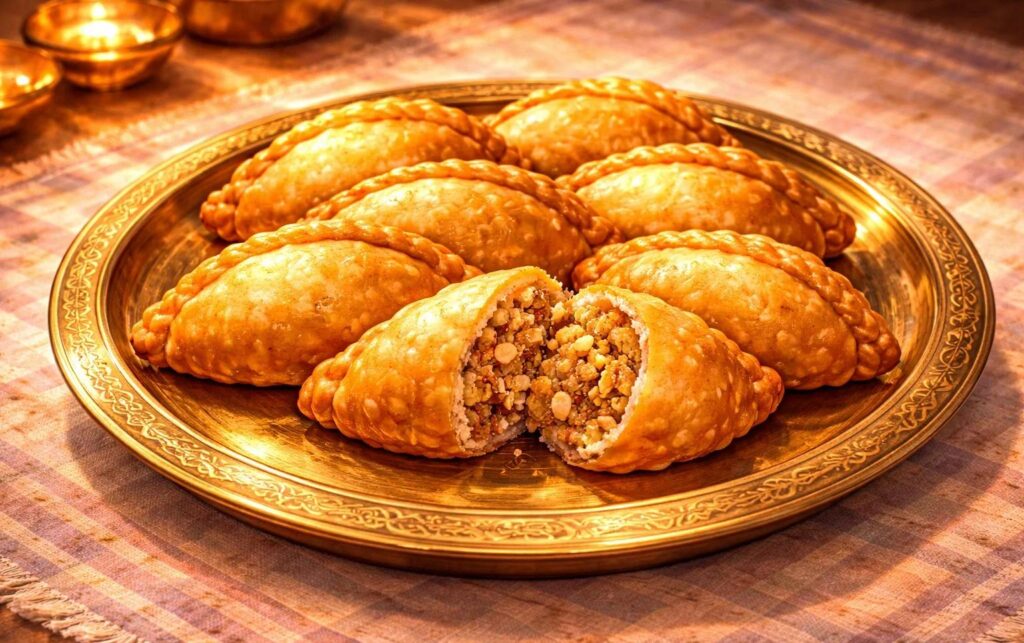
No traditional Maharashtrian Diwali faral platter feels quite complete without karanjis. Their delicate, crisp outer covering and sweet coconut filling make them an irresistible festive treat.
Ingredients
For the filling
- 1 freshly grated coconut
- 1 cup sugar
- Cardamom powder, to taste
For the outer covering
- 1 cup refined flour (maida)
- 1 tablespoon hot ghee, for the dough
- A pinch of salt
- Ghee or suitable frying oil, as required
Method
- Combine the grated coconut and sugar in a heavy-bottomed pan.
- Cook over a medium-low flame, stirring continuously, until the sugar melts and the mixture thickens.
- Add cardamom powder, mix well and set the filling aside to cool completely.
- Sieve the flour into a mixing bowl. Add the hot ghee and rub it into the flour.
- Add a pinch of salt and enough water to knead a firm dough.
- Divide the dough into small portions and roll each into a thin disc.
- Place a spoonful of the cooled coconut filling on one half of each disc. Fold the other half over to form a semicircle.
- Seal the edges firmly, trimming away any excess dough. Make sure there are no gaps through which the filling can escape.
- Heat the ghee or frying oil and fry the karanjis over a moderate flame until lightly golden and crisp.
- Drain and allow them to cool before storing in an airtight container.
Festive tip: Always cool the filling before assembling the karanjis. A firm seal and steady frying temperature help achieve a crisp, beautifully shaped result.
5. Crispy Shankarpalis – A Sweet Crunch for Every Celebration
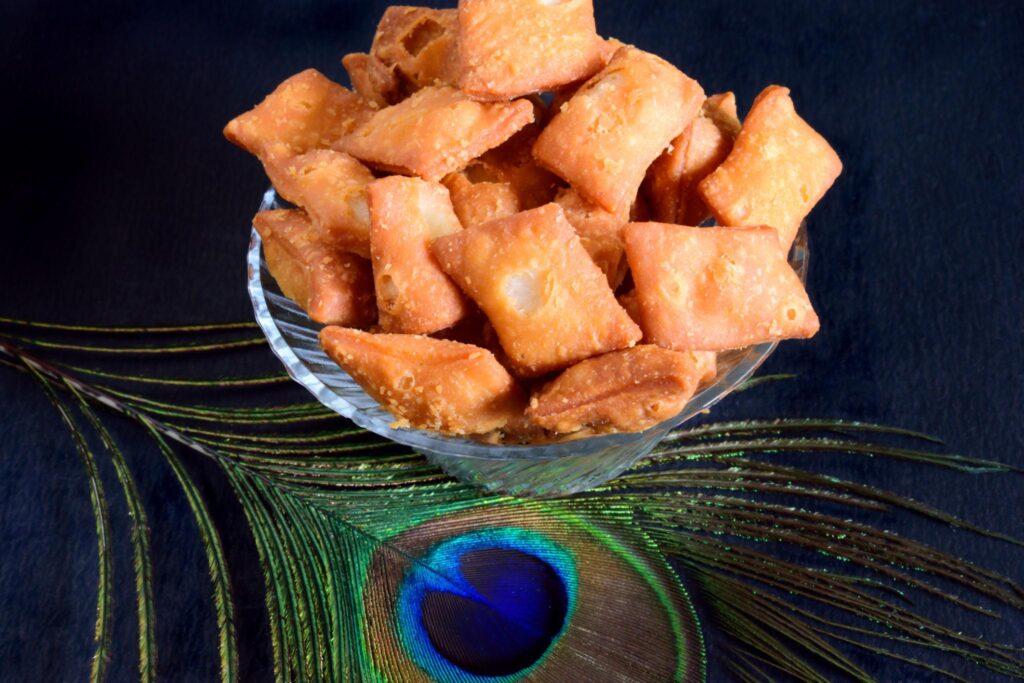
Small, golden and delightfully crunchy, shankarpalis are among the most popular Diwali snacks. They are easy to serve, convenient to store and perfect to enjoy with a cup of tea when friends and family drop by.
Ingredients
- 1 cup milk
- 1 cup ghee
- 1–1½ cups sugar
- Refined flour (maida), as required
- A pinch of salt
- Oil or ghee, for frying
Method
- Combine the milk, ghee, sugar and a pinch of salt in a pan.
- Heat gently, stirring until the sugar dissolves. Bring the mixture to a boil, then switch off the flame.
- Allow it to cool slightly. Gradually add the flour and knead into a smooth, firm dough.
- Cover and let the dough rest briefly.
- Divide it into portions and roll each portion into a moderately thick sheet.
- Cut into small diamond-shaped or square pieces using a knife or pastry cutter.
- Heat the oil or ghee and fry the shankarpalis over medium-low heat until crisp and evenly golden.
- Drain well and allow them to cool completely before storing.
Festive tip: Avoid frying over very high heat. Shankarpalis need enough time to cook through and become crisp without browning too quickly.
6. Thin Poha Chivda – A Crunchy, Flavour-Packed Snack
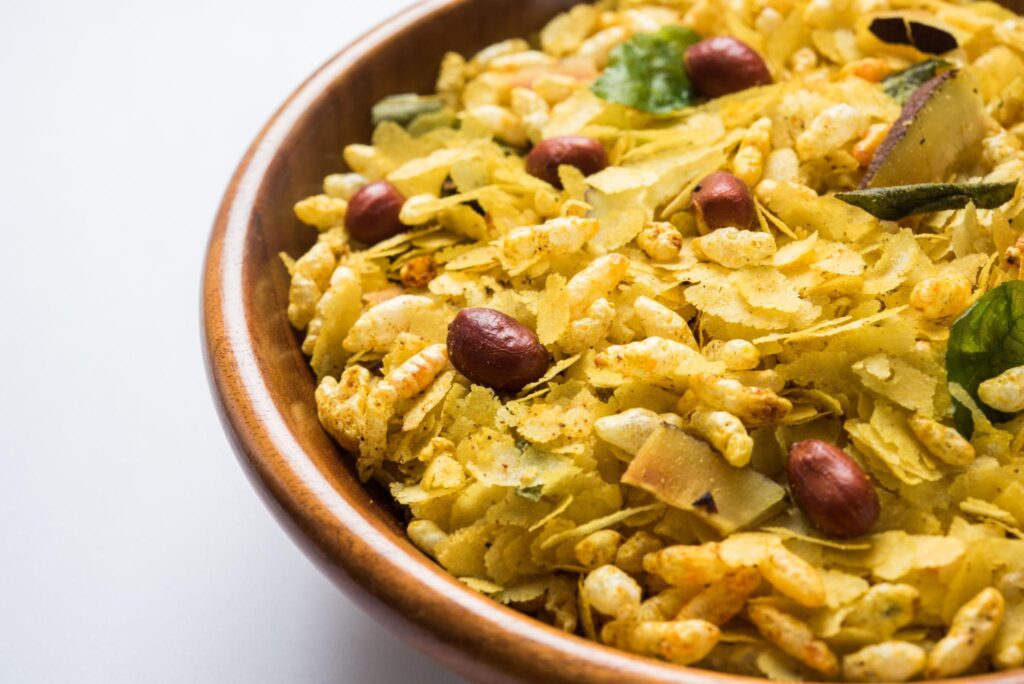
Light, crunchy and full of flavour, thin poha chivda is a Diwali favourite that balances the sweetness of faral with a delicious savoury bite. Peanuts, roasted gram, cashews, coconut and curry leaves lend it a wonderful mix of textures and aromas.
Ingredients
- 500 g thin poha (flattened rice)
- ¾ cup groundnut oil
- ¼ cup refined oil
- 1 cup roasted, skinned peanuts
- ½ cup chopped cashews
- 1 cup roasted gram (dalia)
- ¼ cup thin slices of dried coconut
- ¼ cup sesame seeds
- 1 tablespoon coriander-cumin powder
- 15–20 curry leaves
- 4–5 green chillies, finely chopped
- Cumin seeds, for tempering
- A pinch of asafoetida (hing)
- ½ tablespoon salt, or to taste
- ½ tablespoon turmeric powder
- 1 lemon, optional
Method
- Sieve the poha to remove any dust or unwanted particles.
- Heat a teaspoon of refined oil in a small pan. Add a small batch of poha and roast over a low flame for about a minute, until crisp. The poha should break easily when pressed gently between your fingers.
- Repeat in small batches until all the poha is crisp. Keep aside.
- Heat the remaining oils in a large, wide pan. Add cumin seeds and asafoetida.
- Add the sesame seeds and allow them to splutter lightly.
- Add the chopped green chillies and curry leaves. Fry until crisp, taking care not to burn them.
- Add the dried coconut slices and fry until lightly golden.
- Add the cashews and cook briefly, followed by the roasted gram and peanuts.
- Add the turmeric powder and salt. Mix well.
- If you enjoy a mild tang, squeeze in the juice of one lemon, ensuring that the mixture is stirred well.
- Add the roasted poha and coriander-cumin powder. Toss gently until the seasoning coats the poha evenly.
- Switch off the flame, allow the chivda to cool completely and store it in an airtight container.
Festive tip: Moisture is the enemy of crisp chivda. Ensure that the poha and tempering are dry, and let the mixture cool fully before storing.
7. Traditional Bhajani Chakli – The Pride of Maharashtrian Faral
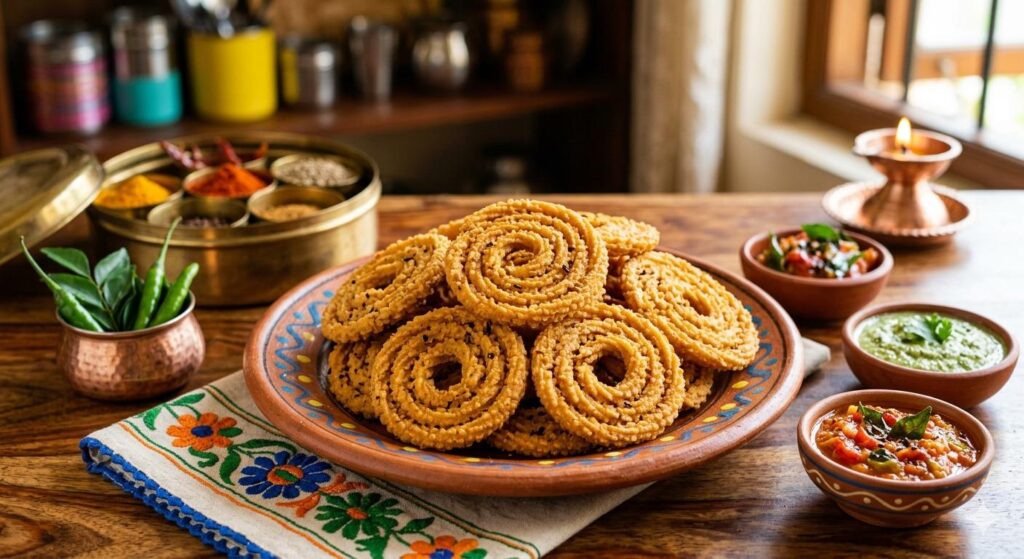
With their distinctive spiral shape, golden colour and satisfying crunch, bhajani chaklis are a quintessential Maharashtrian Diwali delicacy. The secret lies in a well-balanced homemade flour blend and properly seasoned dough.
Ingredients
For the bhajani flour
- 1 kg rice
- 500 g chana dal (Bengal gram)
- 250 g urad dal (black gram)
- 100 g moong dal (green gram)
- 75 g toor dal (pigeon pea)
- 1 handful of sabudana (sago)
- 1 handful of poha
- 1 handful of coriander seeds
- 1 handful of cumin seeds
For the chakli dough
- Bhajani flour, as required
- Water, approximately equal in volume to the flour
- Turmeric powder
- Red chilli powder
- Sesame seeds
- Poppy seeds, optional
- Salt, to taste
- 3–4 tablespoons oil
For frying
- Oil, as required
Method
Preparing the bhajani flour
- Roast the rice, dals, sabudana, poha, coriander seeds and cumin seeds separately over a low flame until aromatic. Each ingredient requires a different roasting time, so avoid roasting everything together from the beginning.
- Combine the roasted ingredients and mix well.
- Allow them to cool completely before grinding into a fine flour. Store the bhajani in an airtight container until required.
Preparing and shaping the chaklis
- Measure the bhajani flour and water in equal volumes as a starting point. The exact amount of water may need adjustment depending on the flour.
- Bring the water to a boil. Add turmeric powder, red chilli powder, sesame seeds, poppy seeds if using, salt and 3–4 tablespoons of oil.
- Once the water boils, lower the flame and add the bhajani flour. Switch off the heat and cover the pan.
- Allow the mixture to rest briefly until it is cool enough to handle.
- Knead thoroughly into a smooth, pliable dough, adding a little warm water if needed.
- Fill a chakli press with the dough and pipe it into neat spirals on a clean surface or greased plate.
- Heat the oil in a deep pan. Fry the chaklis over medium heat until crisp and golden, turning them as needed.
- Drain well and cool completely before storing in an airtight container.
Festive tip: The dough should be soft enough to pass through the chakli press without cracking, but firm enough to hold its spiral shape. Test-fry one chakli before shaping the entire batch and adjust the seasoning or dough consistency if necessary.
In a fast-paced world, these traditions give us a beautiful reason to slow down and reconnect with our roots.
So, this Diwali, make room for your favourite festive treats, share them generously and create new memories with your family.
– Rashmi Mavlankar