

Tulsi Vivah — The Sacred Wedding of Devotion and Joy
In the heart of Indian tradition, few celebrations capture the essence of faith, beauty, and simplicity like Tulsi Vivah — the ceremonial marriage of the holy basil plant, Tulsi, with Lord Vishnu, often worshipped in the form of Shaligram. Observed on Kartik Shukla Ekadashi or Dwadashi, this ritual marks the end of Diwali festivities and the beginning of the auspicious Hindu wedding season. Yet, beyond its religious significance, Tulsi Vivah has always been a festival of warmth, laughter, and togetherness — especially for children who see in it the charm of a divine wedding right in their own courtyard.
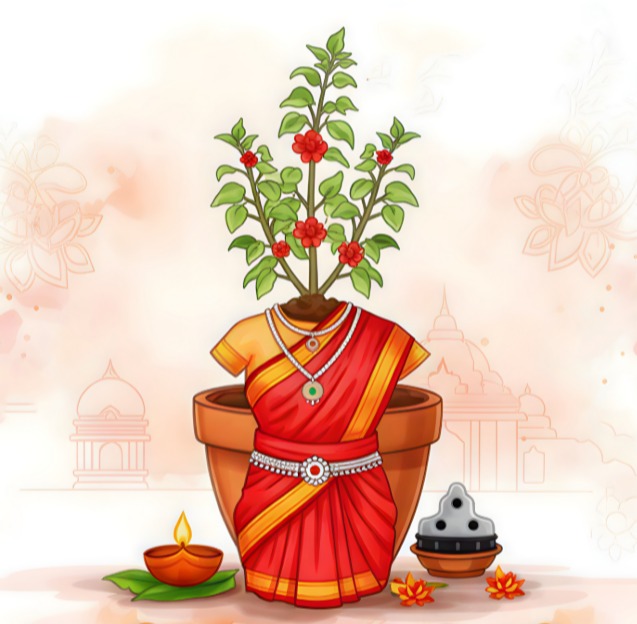
In every traditional home, the preparations for Tulsi Vivah would begin several days in advance. The courtyard, where the Tulsi plant stood on her small pedestal or Vrindavan, would be cleaned and lovingly decorated. The women of the house would smear the ground with a mixture of cow dung and water, symbolizing purity, and adorn the space with intricate rangoli patterns. The Tulsi plant, usually placed in a beautifully painted pot or altar, would then be transformed into a radiant bride. A tiny red saree or chunri would be draped around her leaves, a delicate nose ring added, and strings of beads or pearls would become her ornaments. Beside her, a small black stone representing Lord Vishnu, or Shaligram, would be set as the groom, often under a makeshift paper canopy serving as the mandap.
When evening descended and oil lamps flickered softly in the courtyard, the family gathered around for the sacred wedding. The ceremony mirrored a traditional Hindu marriage, complete with mantras, kanyadaan, and mangalashtak. Women sang melodious folk songs — “Tulshicha lagna ahe” echoing through the neighborhood — while the fragrance of incense and fresh marigolds filled the air. The priest, or sometimes an elder from the family, performed the rituals with devotion, treating the Tulsi plant not as a symbol, but as a living goddess, Lakshmi herself, uniting with Lord Vishnu.
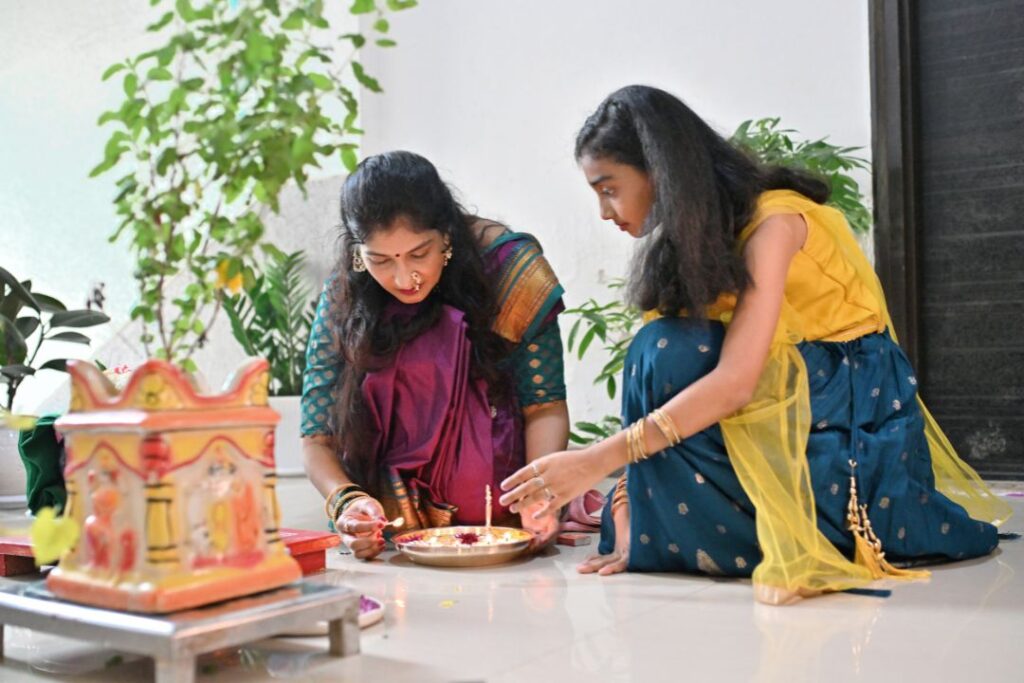
After the puja, plates of sweet sheera, ladoo, and kheer were distributed as prasad. Families exchanged greetings, laughter, and stories. It was a simple, heartfelt celebration — one that needed no grandeur to feel sacred.
For the children, Tulsi Vivah was pure magic. They saw it as a real wedding, complete with a bride, a groom, and endless reasons to celebrate. Little girls helped dress Tulsi, tying her tiny saree with utmost care and decorating her with flowers. Boys would carry the Shaligram like a groom in procession, teasing and laughing along the way. The older members of the family looked on with affection, amused by the children’s excitement and touched by their innocent faith. For many, this festival became a cherished memory — one that still carries the scent of burning camphor, the glow of small diyas, and the sweet sound of temple bells echoing in the cool November air.
Beyond its rituals, Tulsi Vivah holds a deeper cultural and spiritual meaning. The Tulsi plant is regarded as a symbol of purity and devotion. It is believed that performing Tulsi Vivah brings prosperity, happiness, and peace to the household. On another level, it reflects India’s profound respect for nature — a reminder that plants, too, are sacred, and that divinity exists in all living forms. Tulsi, known for her healing and medicinal properties, purifies the air and strengthens the body. To care for her daily — by watering the plant, lighting a diya, or offering prayers — is to nurture both the environment and the spirit.
Today, in an age of fast-paced lives and modern distractions, such intimate traditions often fade quietly. Yet, there is something timeless and deeply grounding about Tulsi Vivah. It is a festival that binds generations together — grandparents narrating the legends of Vrinda and Vishnu, mothers teaching their children how to tie the red thread around the plant, and families gathering under the evening sky to celebrate devotion through love and ritual.
Tulsi Vivah reminds us that spirituality is not found only in temples or grand ceremonies, but in the small, everyday acts of faith — in lighting a lamp, in singing a song, in offering a leaf of Tulsi with love. It is a celebration of purity, gratitude, and the divine connection between humans and nature — a bond as eternal and sacred as the union it commemorates