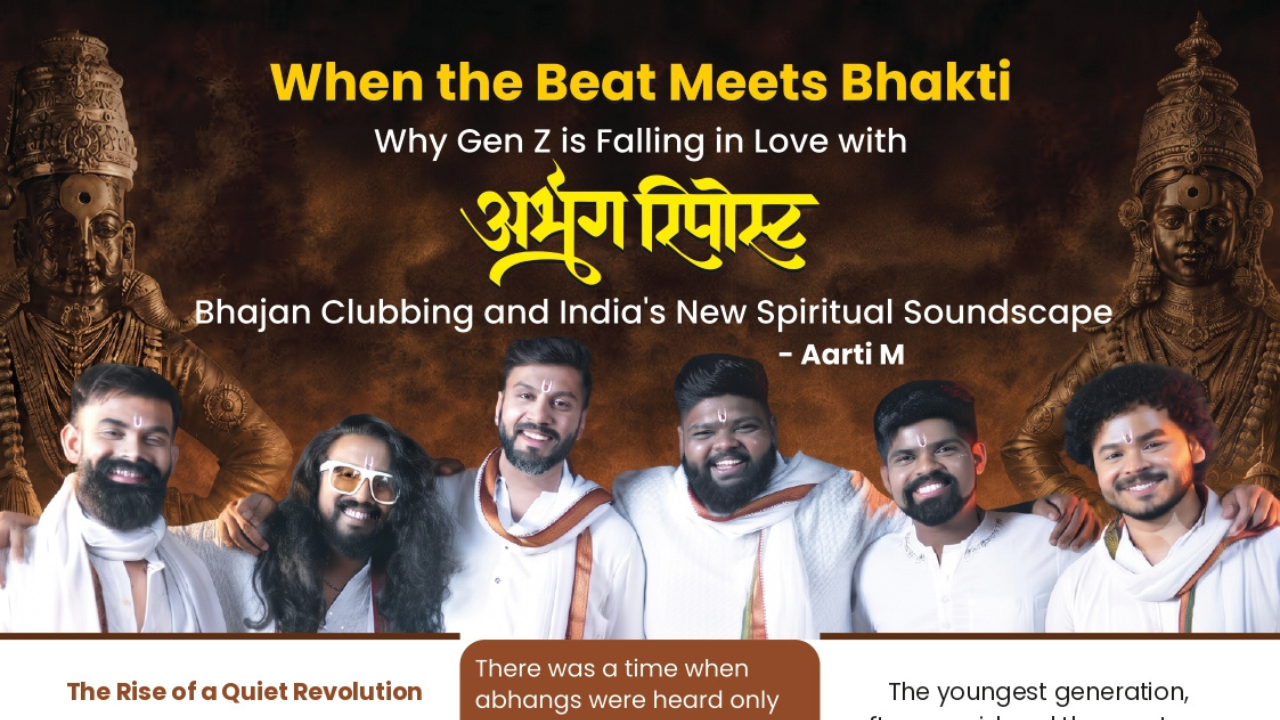
When the Beat Meets Bhakti
When the Beat Meets Bhakti
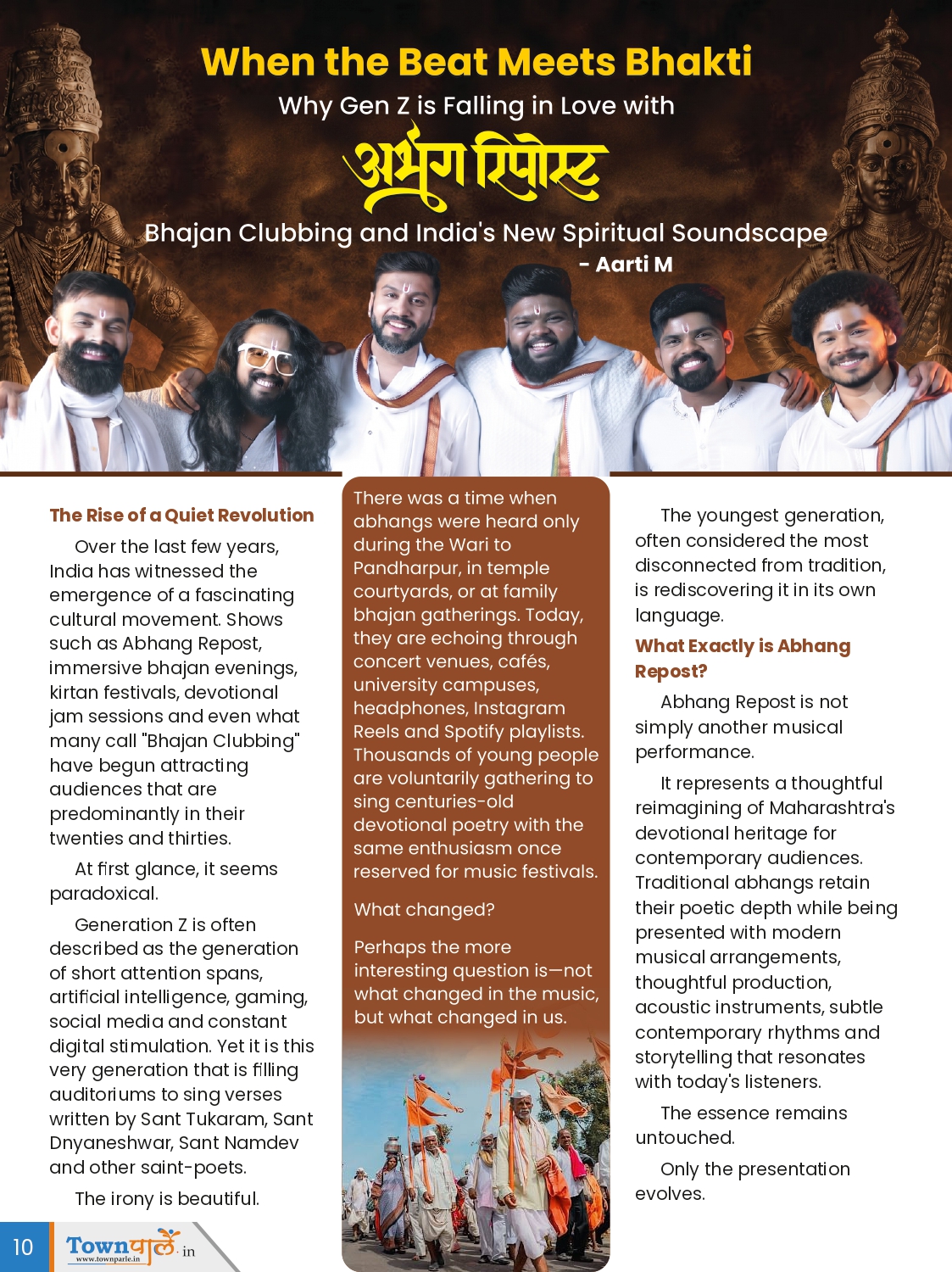
Why Gen Z is Falling in Love with Abhang Repost, Bhajan Clubbing and India’s New Spiritual Soundscape
The Rise of a Quiet Revolution
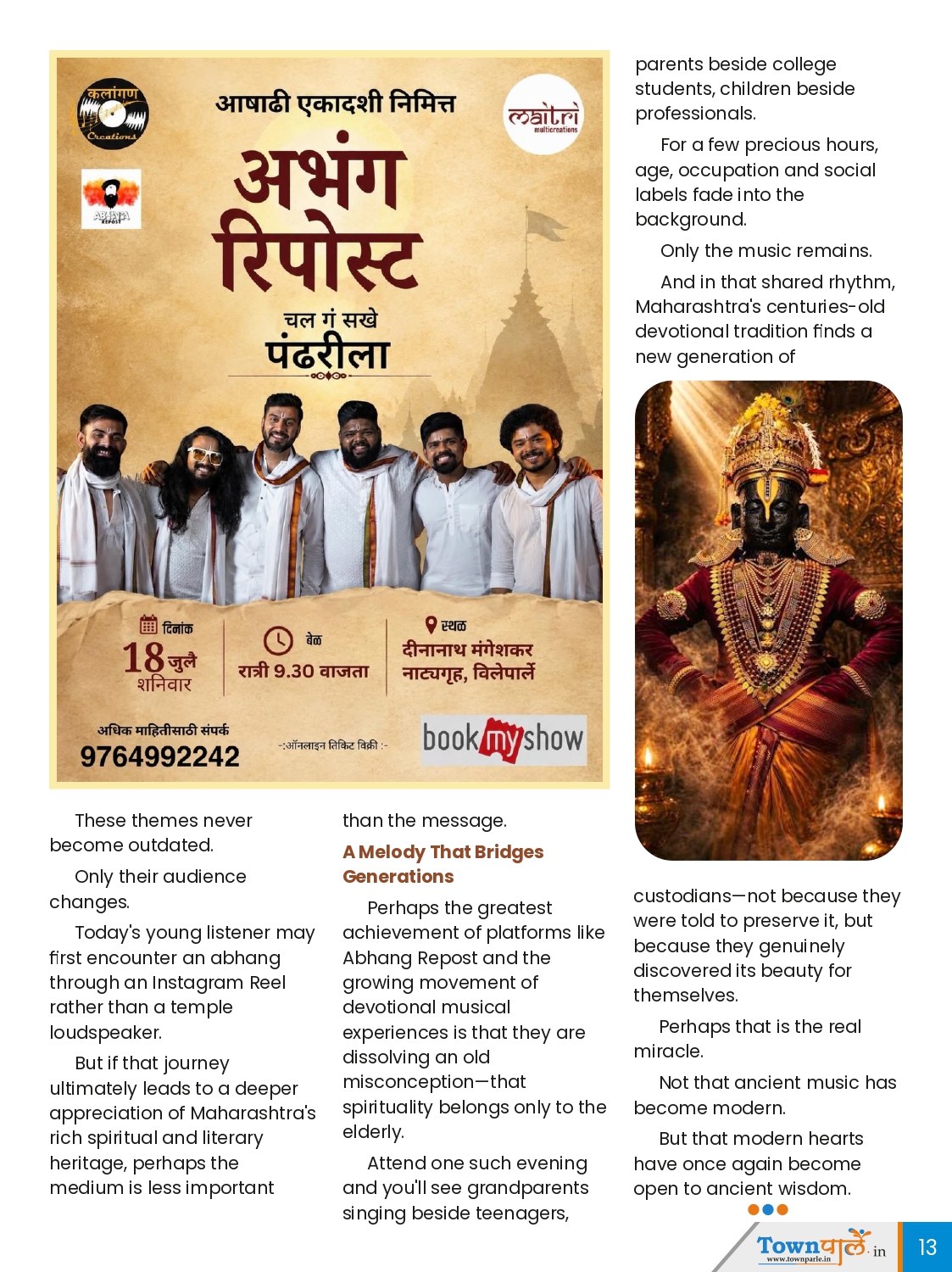
Over the last few years, India has witnessed the emergence of a fascinating cultural movement. Shows such as Abhang Repost, immersive bhajan evenings, kirtan festivals, devotional jam sessions and even what many call “Bhajan Clubbing” have begun attracting audiences that are predominantly in their twenties and thirties.
At first glance, it seems paradoxical.
Generation Z is often described as the generation of short attention spans, artificial intelligence, gaming, social media and constant digital stimulation. Yet it is this very generation that is filling auditoriums to sing verses written by Sant Tukaram, Sant Dnyaneshwar, Sant Namdev and other saint-poets.
The irony is beautiful.
The youngest generation, often considered the most disconnected from tradition, is rediscovering it in its own language.
What Exactly is Abhang Repost?
Abhang Repost is not simply another musical performance.
It represents a thoughtful reimagining of Maharashtra’s devotional heritage for contemporary audiences.
Traditional abhangs retain their poetic depth while being presented with modern musical arrangements, thoughtful production, acoustic instruments, subtle contemporary rhythms and storytelling that resonates with today’s listeners.
The essence remains untouched.
Only the presentation evolves.
More Than Music—It is an Experience
Those who attend such performances often describe something difficult to explain.
People arrive expecting entertainment.
They leave carrying peace.
Unlike many concerts where audiences remain passive spectators, devotional music naturally invites participation.
Strangers sing together.
Phones slowly disappear into pockets.
Applause gives way to collective chanting.
The atmosphere shifts from performance to participation.
Psychologists have long observed that collective singing synchronises breathing patterns and heart rhythms among participants.
Group singing also encourages the release of endorphins and oxytocin—chemicals associated with emotional well-being, trust and social connection.
While these gatherings are not a substitute for professional mental health care, they can create moments of belonging and emotional calm that many people find deeply restorative.
In an age of increasing loneliness, that shared experience carries remarkable power.
Why is Gen Z Drawn Towards It?
The reasons are more profound than nostalgia.
• Digital Fatigue
This generation has grown up online.
Every notification demands attention.
Every platform encourages comparison.
Every scroll offers another distraction.
Many young adults now consciously seek experiences that slow the mind instead of stimulating it further.
Devotional music offers exactly that.
For two hours, there is nowhere else to be.
• Authenticity Over Perfection
Social media celebrates polished lives.
Abhangs celebrate imperfect human beings searching for truth.
The poetry of Sant Tukaram speaks openly about doubt, struggle, failure, surrender and hope.
That honesty feels surprisingly contemporary.
Young listeners recognise themselves in words written hundreds of years ago.
• Community Without Competition
Many social gatherings today revolve around appearance, networking or performance.
Bhajan gatherings create a different kind of space.
Nobody asks what phone you own.
Nobody measures success.
Everyone becomes part of the same voice.
That equality is refreshing.
• Spirituality Without Preaching
Interestingly, many young attendees do not describe themselves as deeply religious.
They are simply curious.
They are searching for stillness, meaning and emotional balance.
These performances rarely force belief.
Instead, they invite reflection.
That distinction matters.
The Emergence of “Bhajan Clubbing”
One of the most talked-about cultural trends is the phenomenon popularly referred to as Bhajan Clubbing.
The phrase may sound contradictory.
Yet it captures an important shift.
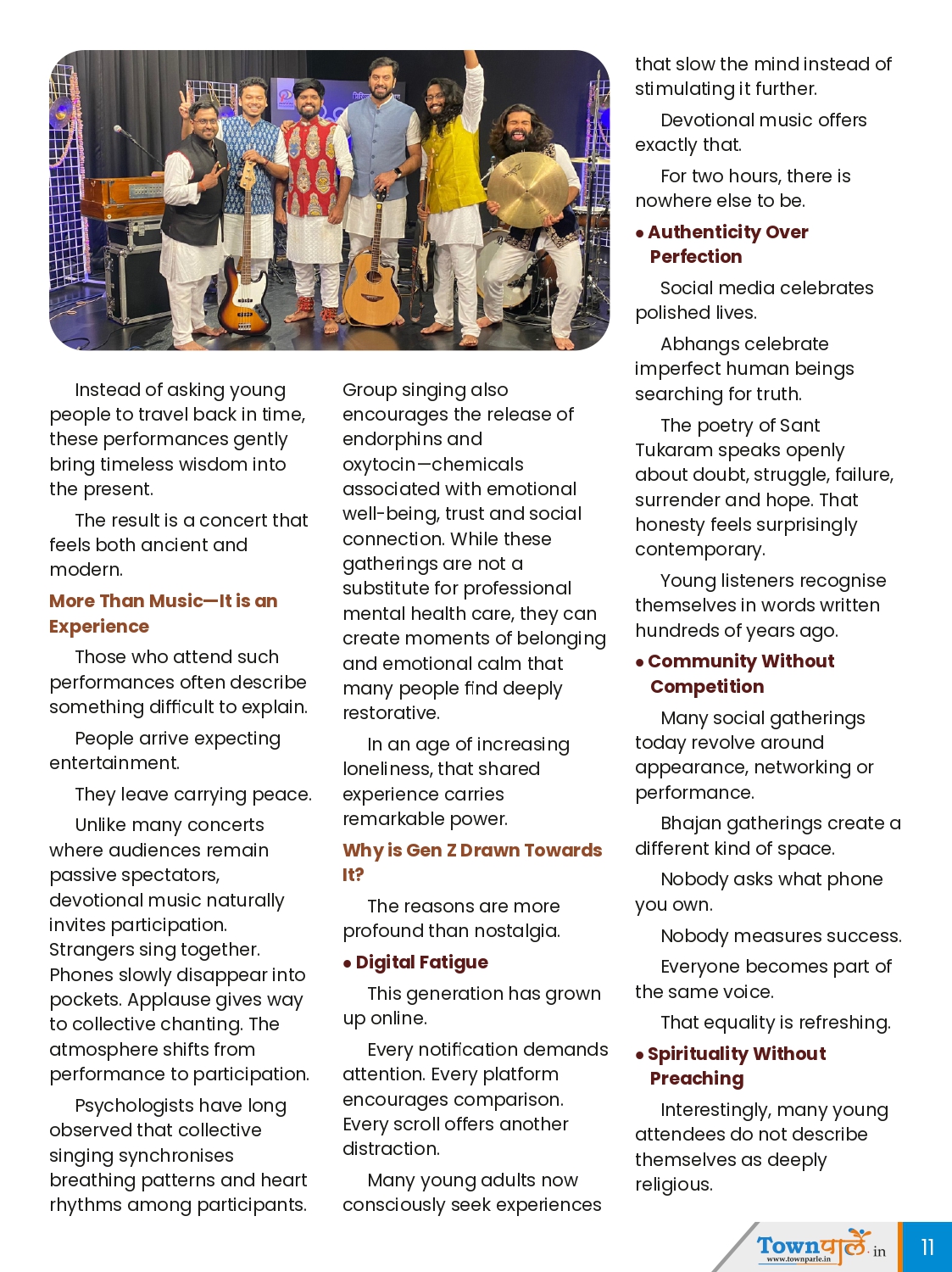
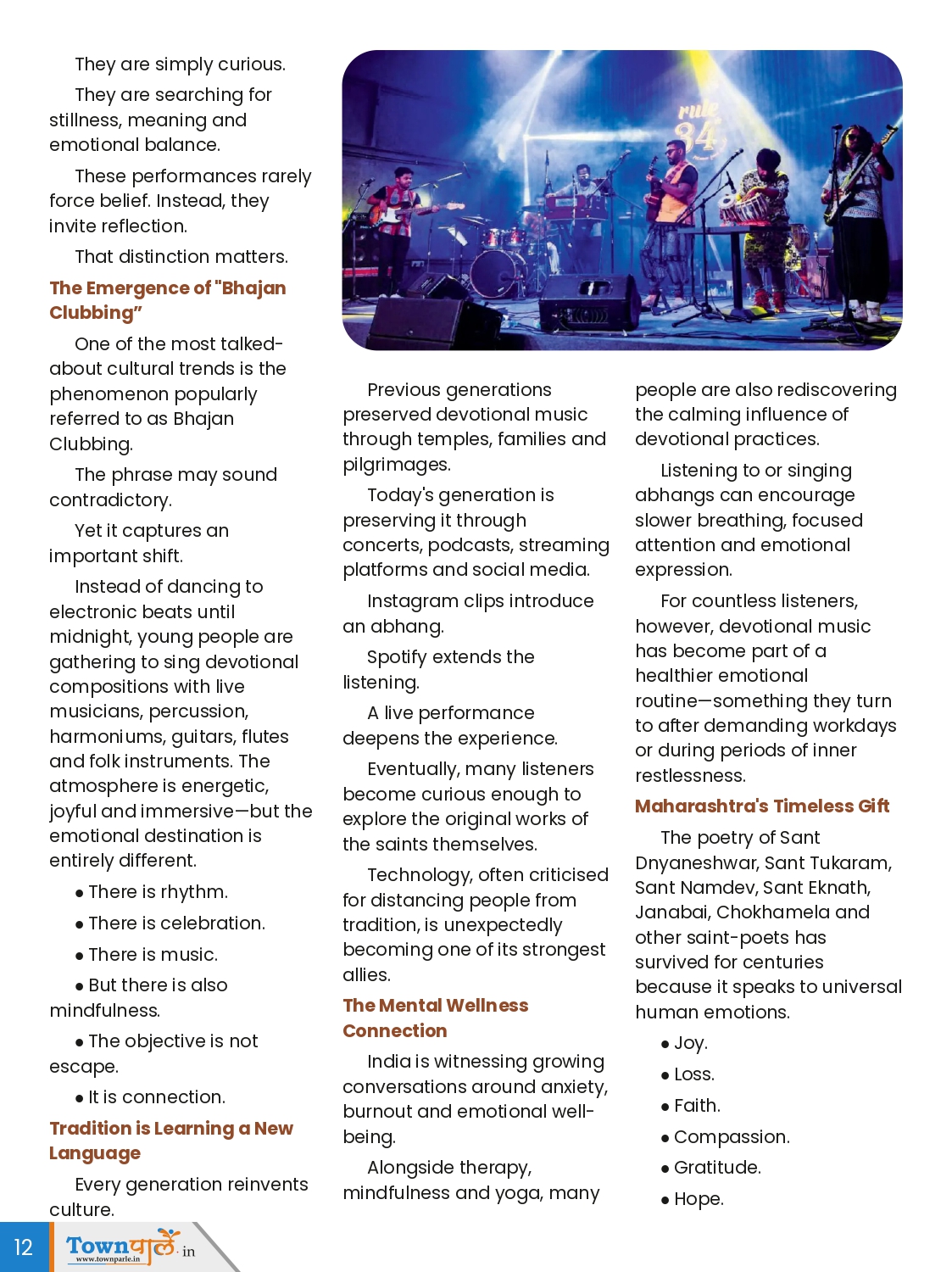
Instead of dancing to electronic beats until midnight, young people are gathering to sing devotional compositions with live musicians, percussion, harmoniums, guitars, flutes and folk instruments.
The atmosphere is energetic, joyful and immersive—but the emotional destination is entirely different.
There is rhythm.
There is celebration.
There is music.
But there is also mindfulness.
The objective is not escape.
It is connection.
Tradition is Learning a New Language
Every generation reinvents culture.
Previous generations preserved devotional music through temples, families and pilgrimages.
Today’s generation is preserving it through concerts, podcasts, streaming platforms and social media.
Instagram clips introduce an abhang.
Spotify extends the listening.
A live performance deepens the experience.
Eventually, many listeners become curious enough to explore the original works of the saints themselves.
Technology, often criticised for distancing people from tradition, is unexpectedly becoming one of its strongest allies.
The Mental Wellness Connection
India is witnessing growing conversations around anxiety, burnout and emotional well-being.
Alongside therapy, mindfulness and yoga, many people are also rediscovering the calming influence of devotional practices.
Listening to or singing abhangs can encourage slower breathing, focused attention and emotional expression.
For countless listeners, however, devotional music has become part of a healthier emotional routine—something they turn to after demanding workdays or during periods of inner restlessness.
Maharashtra’s Timeless Gift
The poetry of Sant Dnyaneshwar, Sant Tukaram, Sant Namdev, Sant Eknath, Janabai, Chokhamela and other saint-poets has survived for centuries because it speaks to universal human emotions.
Joy
Loss
Faith
Compassion
Gratitude
Hope
These themes never become outdated.
Only their audience changes.
Today’s young listener may first encounter an abhang through an Instagram Reel rather than a temple loudspeaker.
But if that journey ultimately leads to a deeper appreciation of Maharashtra’s rich spiritual and literary heritage, perhaps the medium is less important than the message.
A Melody That Bridges Generations
Perhaps the greatest achievement of platforms like Abhang Repost and the growing movement of devotional musical experiences is that they are dissolving an old misconception—that spirituality belongs only to the elderly.
Attend one such evening and you’ll see grandparents singing beside teenagers, parents beside college students, children beside professionals.
For a few precious hours, age, occupation and social labels fade into the background.
Only the music remains.
And in that shared rhythm, Maharashtra’s centuries-old devotional tradition finds a new generation of custodians—not because they were told to preserve it, but because they genuinely discovered its beauty for themselves.
Perhaps that is the real miracle.
Not that ancient music has become modern.
But that modern hearts have once again become open to ancient wisdom.