
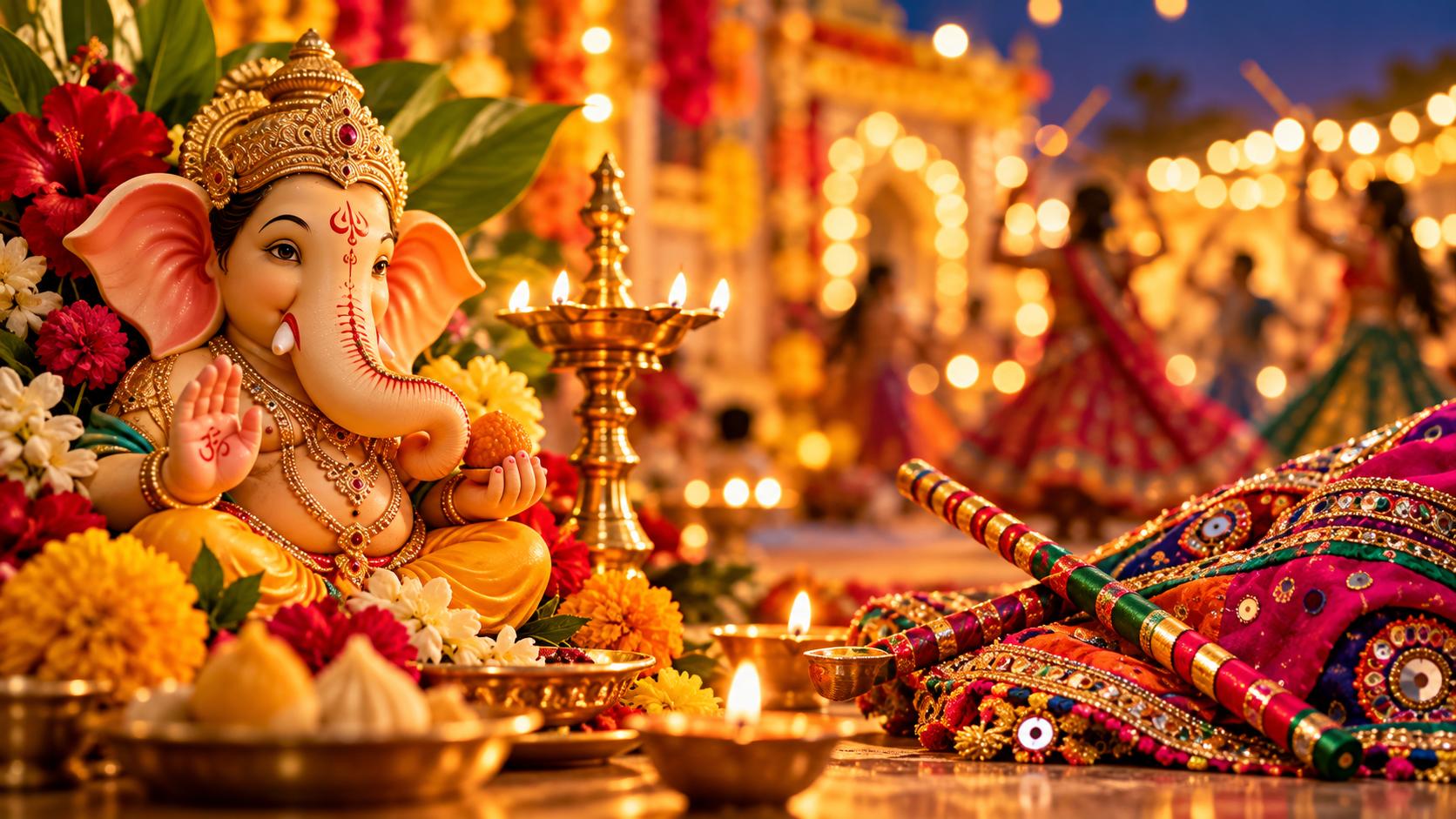
Find Your Moment-Of-Awe During Festivals!
We were mesmerized when we first saw the Mysore Palace on Diwali eve.
It was illuminated with 97000 bulbs. In Coorg, we were enthralled to see how each tree in the forest was different in shape and structure and nothing repeated itself in nature.
We found it breathtaking to see several miles of land covered with flowerbeds flaunting hundreds of varieties of flowers in the Kaas Plateau in Maharashtra post monsoon.
All these sights and experiences brought a feeling of AWE to us.
But I feel the children of today may not be overwhelmed as much as we were to see these things, because there are high chances of them having seen them on internet already. Their journey of experiencing a place or a thing starts and concludes digitally. In between digital, comes the actual experience. It starts by seeing a few pictures, videos online and concludes by posting their own online.
In this age of advanced technologies, children are far better informed and exposed to things digitally. While the technology makes them better informed, it takes away a small chunk of emotion from them.
It is the emotion of AWE.
IT IS THE FEELING OF WONDERMENT.
It is the magic that one feels while experiencing a wonder unexpectedly.
The level of wonderment in children today is not the same as it was in the kids of the previous generation.
Ten days of Ganesh festival gives us the opportunity to re-stimulate this emotion in children who are born / growing up in the digital age. Ganesha depicts someone who is easy-going. No wonder, he is the favorite of all and is celebrated throughout the geographical regions of India.
There are two aspects to the festival and celebration.
One way is, visiting the pandals and experiencing different narratives of Ganesha. Some Ganesh pandals show a physical depiction that is larger-than-life, leaving children awestruck. Others speak a language of minimalism that also sparks wonderment in children.
Cultivating experiences of awe not just makes our children emotionally fitter and expressive but also helps them overcome emotions that are not-so-positive. Allow children to let loose and dance their heart out during festive percussions. Let them feel free.
The other way is to celebrate Bappa at home in an eco-friendly manner. A form that speaks a language that evades through the rational minds of children and persuades them to think beyond the obvious. Such experiences give them the opportunity to connect with themselves at a much deeper level.
Yesterday I was in the rickshaw with my three year old son and trying to convince him to speak softly and behave well with everyone. Suddenly he said; “Yes Mumma, you are right. Bappa never fights with anyone. He is always quiet and calm. He always does good deeds. Now I will also not fight with anyone. I will speak softly. Then Bappa will never leave our home.”
That’s when I realized the power of the emotional bond that a child develops while celebrating at home. It is the wonder that they feel when they experience something powerful that can’t be explained. IT IS THE FEELING OF AWE.
Ganesha has different names and forms; Bal Ganesha – child-like form, Taruna Ganpati – youthful form, Bhakti Ganesha – devotee form, Veera Ganpati – valiant Ganpati, Shakti Ganpati – the powerful form, Dvija Ganpati – Ganpati who is born twice, and many more. He is also celebrated in different ways and with different symbols.
Whatever be the form of Bappa, the narrative is the same; Wisdom. He speaks a language that goes beyond the rational mind and connects with the soul. It is a language that is rare to find in ‘the Breaking News-era’. It is the language of silence that breaks through the sound clutter of breaking news and topicality today. It is this connect that takes the Zen Z, millennials and all of us closer to. Reason why, we all are drawn to Bappa like a child and we recreate and celebrate him in so many different ways; some make him with clay, some with veggies, some with edibles, some with chocolates, and some present him in the animated style of ‘My friend Ganesha’.
After bidding adieu to Bappa, we welcome Ma, who is celebrated in nine different forms; Shailaputri, Brahmacharini, Chandraghanta, Kushmanda, Skandamata, Katyayani, Kalaratri, Mahagauri, and Siddhidatri. Each day of Navratri is an opportunity to invoke a positive emotion and power into ourselves and embrace ‘Shakti’.
The mythological tales, the representation, the rituals and the celebration of Navratri changes with every state in India.
North India celebrates Navratri as Ramleela and Ram getting Sita home. Small girls representing the child form of Ma are invited for a meal and are being worshipped.
South India gets Guddis / Dolls home as a representation of Ma and perform the Puja.
Kanya Pujan and Bhoj, popular in North India
The West India twirls on the methodical beats of Garba taal and spins the vibrant sticks of Dandiya to a music that’s a mix of folk and modern. East India gloriously applauds Ma’s victory over the demon Mahishasura for four days with Vedic chants, Dhunchi naach (dancers dance to the beats of dhak (drum) holding an earthen pot filled with incense), a grand feast and much more. East, West, North or South, it is the most opportune time for children and adults alike to experience moments-of-awe and fee AWE-SOME.
Whether we celebrate Bappa and Ma with pomp and show or in a subtle way, it renews our energy levels and creates a sense of awe. The moment we experience awe, we feel we are too small. We start to move away from our ‘we are someone important / big’ feeling. We start to UN-SELF. This process of ‘un-selfing’ empowers us to look around and absorb more. As we absorb, we try to empathize and help.
We are currently celebrating Navratri and celebrating the presence and essence of MA in our lives. It is a wonderful opportunity for all parents to create MOMENTS-OF-AWE in their children.
Managers across corporates must also try to identify and create moments of awe in their team. This will help the team members to express and act to their optimum. HR leaders and mentors must use festive celebrations as a means to get the Human Resources to create and experience moments of awe. Moments like these help cleanse the mind of Human Resources who are otherwise only expected to PERFORM, EVALUATE AND PERFORM BETTER.
Whether you are a parent or a Human Resources Lead, the ongoing and the upcoming festivities is the apt time to foster experiences of awe in children and human resources alike and leave them radiate positive energy through the rest of the year. Leave them awestruck, make them feel goose bumps and let their heat beat faster. It will blow away the clouds of anxiety.
This Navratri, LET US ALL FIND AND INDULGE IN MOMENTS-OF-AWE!
Let us make the festivities AWE-SOME!