
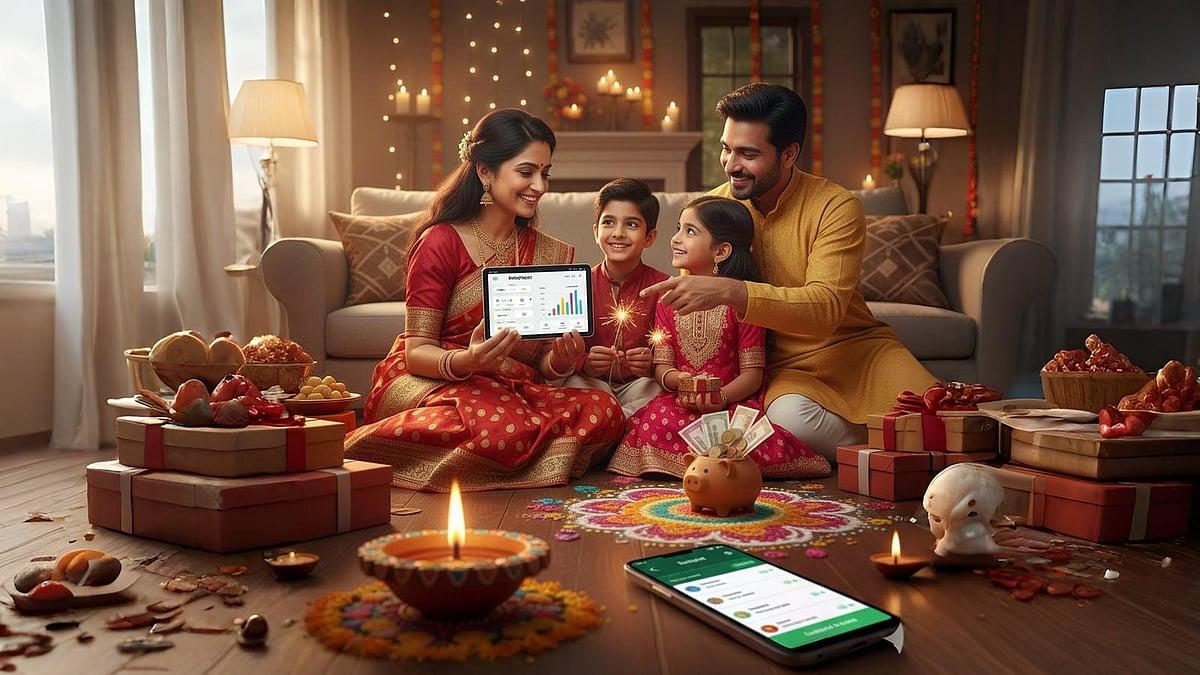
OCTOBER — FESTIVE SPENDING: Joy Without Regret
A Vile Parle (East) Story — The Joshi Family (Season 2026)
Purpose Thread: Helping daughters understand mindful festive spending — joy without guilt, celebration without chaos.
CORE THEME
October teaches that festivals are meant for light, warmth, and togetherness — not financial stress. You can celebrate fully without overspending if you plan, prioritize, and buy with intention.
BRIEF INTRODUCTION
October in Mumbai glows differently. Fairy lights appear on balconies, diyas line doorsteps, mithai boxes travel between homes, and even the narrowest lanes seem to wear a smile. The festive season brings joy — but silently, it also brings pressure.
In the Joshi home in Vile Parle (East), October 2026 arrived with Diwali preparations, half-written shopping lists, desires, temptations, discount banners, “limited offer” hoardings, and endless “SALE! SALE! SALE!” notifications on the girls’ phones.
Chitra (21) wanted new clothes, accessories, two gifts for close friends, and one smart, professional-looking kurti suitable for her internship office. Sneha (16) wanted fairy lights for her room, festive shoes, and a special gift for her best friend.
Prakash and Seema watched quietly. Their daughters weren’t overspending yet… but the potential was high. They realized this was the perfect month to teach a lesson most Indian families struggle with:
How to enjoy festivals beautifully without burning holes in the pocket.
✨ MAIN STORY
THE MONTH OF FESTIVE MADNESS & MINDFUL MAGIC
1️⃣ The “We Were Just Looking” Bill
On October 3rd, the Joshi family visited a popular mall, “just to look” at Diwali clothes.
Sneha declared, “Mummy, don’t worry. We’re only window shopping.”
Chitra nodded, “Exactly. No buying today. Just exploring options.”
Three hours later, they walked to the exit carrying:
- 2 kurtis for Chitra
- 1 pair of shoes for Sneha
- 1 kurta for Prakash
- A set of diyas Seema “just liked”
At the billing counter, the total appeared: ₹8,450.
Sneha stared at the amount. “Mummy… are you crying?”
Seema whispered, “No… just sweating in this air-conditioning.”
Prakash sighed. “And this, my dears, is why October needs planning.”
Chitra looked guilty. “We didn’t mean to overspend.”
Prakash smiled gently. “Exactly. That’s how festive overspending works — not deliberately, but quietly, unintentionally.”
2️⃣ October 5 — The Family Festive Meeting
After dinner, Prakash called a family meeting.
“This Diwali,” he began, “we will learn how to celebrate without feeling tense when the credit card bill comes.”
Sneha made a face. “So… no fun allowed?”
Prakash laughed. “Fun is compulsory. Mindless spending is not.”
He introduced a simple rule:
THE DIWALI 5–BUCKET SYSTEM
Every family member would divide their total festive budget into five clear categories:
- Clothes
- Gifts
- Home Decorations
- Festive Food / Sweets
- Miscellaneous (for true emergencies only)
Chitra asked sweetly, “Do ‘cute earrings’ come under miscellaneous?”
Seema answered instantly, “No.”
Sneha burst out laughing.
STEP 1 — CREATING REALISTIC BUDGETS
Each person wrote a realistic number for themselves.
- Prakash: “I’ll allocate ₹2,500.”
- Seema: “I need ₹3,000, including sweets and basic pooja items.”
- Chitra: “I’m earning now. I’ll use ₹2,000 of my own — not from you.”
- Sneha: “I’ll spend ₹1,200 from my savings. Not a rupee more.”
Prakash nodded with satisfaction. “Good. Now the real challenge is not writing the numbers — it is sticking to them.”
STEP 2 — THE ONE GOLDEN QUESTION
On the whiteboard, he wrote:
“Does this item add real joy, or is it impulse?”
“That,” he announced, “is our golden Diwali question.”
Sneha groaned, “This one question will kill 90% of my decisions.”
Chitra admitted, “And at least 60% of mine.”
Seema smiled. “Remember, girls — Diwali is about light in the heart, not just glitter in shopping bags.”
FESTIVE TESTS BEGIN
1️⃣ The Clothes Temptation
On October 10th, Chitra and Sneha visited a boutique in Vile Parle. Within minutes, Chitra fell in love with a sparkling pastel kurti priced at ₹2,900.
Sneha gasped. “Didi, that is your entire budget!”
Chitra tried to justify. “But it’s perfect… the colour, the fit… and imagine the pictures!”
Sneha raised an eyebrow. “Does it add real joy, or is it impulse?”
Chitra groaned. “I officially hate that question.”
After a pause, she put the expensive kurti back and chose a simpler, elegant kurti for ₹1,150 — high quality, timeless, office-appropriate.
As they left the shop, she said, “This feels like a grown-up win. I still get to look good, and my budget stays alive.”
2️⃣ The Shoes Dilemma
Sneha’s turn came soon. She found a gorgeous pair of embellished juttis.
Price: ₹1,799
Budget: ₹1,200
She almost wailed. “Mummy… my shoes cost more than my entire personality.”
Seema laughed. “Then maybe your personality needs better pricing.”
They kept looking and found a beautiful, comfortable pair for ₹999 — sturdy, versatile, and festive enough.
Sneha thought for a moment and said, “Okay. I choose value over just vibes.”
Chitra squeezed her shoulder. “July’s ‘value vs price’ lesson has officially graduated to Diwali.”
3️⃣ The Gift Confusion
Chitra wanted to gift a diary to her best friend. She found a pretty one for ₹850, but it felt expensive for her budget.
Sneha suggested, “Why not buy a plain journal and customize it yourself? You’re good at doodling and calligraphy.”
Chitra loved the idea. She bought a blank journal for ₹150, then spent time decorating it with thoughtful quotes, small artwork, and a handwritten note inside.
When she finished, Seema looked at it and smiled. “This looks like a ₹2,000 gift. Personal touch beats price. Always.”
4️⃣ The Fairy Lights Temptation
Sneha saw beautiful LED fairy lights with tiny butterflies. Cost: ₹650. She already had working lights from last year.
“But THESE have butterflies,” she argued.
Prakash asked, “Your old ones are working?”
“Yes…”
“Then use them. Diwali isn’t about replacing functioning things just because something ‘new’ exists. Joy also comes from reusing well.”
Sneha sighed… and then smiled. “Fine. Old lights, new wisdom.”
DIY SWEETS DAY — MEMORY OVER MONEY
On October 21st, instead of buying all sweets from the shop, Seema announced: “This year, we’re making most of the Diwali sweets at home.”
The daughters groaned initially. “So much work! Can’t we just order?”
But once they started — shaping shankarpali, rolling ladoos, stirring kheer, arguing about who made better anarase — the house filled with aroma, warmth, and laughter.
At one point, Sneha said with sticky hands, “This feels more like Diwali than buying everything ready-made.”
Seema replied softly, “Because, beta, memories taste better than money.”
They still bought a few special sweets from their favourite shop — but the heart of Diwali came from their own kitchen.
DIWALI DAY — LIGHT, CALM & CONTENTMENT
On October 29th, Diwali morning arrived with soft music, incense, and golden sunlight entering through the curtains.
The Joshi home looked beautiful — not because of expensive decor, but because everything had been chosen carefully and done together:
- Chitra wore her simple, elegant kurti — confident and comfortable.
- Sneha wore her under-budget juttis and reused last year’s accessories.
- The entrance had hand-made rangoli.
- Diyas lit every corner, casting a warm glow that no LED could replace.
Neighbours complimented them. “Your home looks so peaceful and classy this year.”
Seema whispered to Prakash, “See? Warmth doesn’t come from spending more. It comes from feeling at peace.”
Later that day, Chitra received a message from her friend:
“Your handcrafted journal is the BEST gift I’ve received this Diwali. It feels like a piece of your heart.”
Sneha got a voice note from her best friend:
“Your surprise made my whole Diwali. Thank you for being so thoughtful.”
Both sisters realized something quietly powerful:
The best gifts don’t need the biggest price tags. They just need sincerity.
OCTOBER 31 — THE FESTIVE REFLECTION
On the last evening of October, with leftover sweets and soft lantern light around them, the family had their monthly reflection.
Prakash asked, “So, what did October teach us?”
Sneha said, “Festive shopping is fun only when I choose joy, not impulse. Otherwise, fun becomes regret.”
Chitra added, “Planning makes celebration peaceful. Overspending makes celebration stressful.”
Seema said, “Diwali is about light inside the house and inside the heart — not just on shopping sites.”
Prakash concluded, “Mindful spending doesn’t reduce joy. It doubles it, because there is celebration now and no guilt later.”
Sneha leaned on Seema’s shoulder. “Mummy… this felt like the most peaceful Diwali ever.”
Seema smiled. “And one of the most MoneySmart ones too.”
⭐ FTWC — FROM THIS WE CONCLUDE
October gives a lesson every family needs:
Festivals are for happiness — not for financial hangovers.
Mindful spending is not boring — it is beautiful. It protects your peace, your pocket, and your ability to enjoy.
From this month, the Joshi daughters discovered that:
- A planned Diwali feels lighter.
- A mindful Diwali feels richer.
- A thoughtful Diwali feels warmer.
- A MoneySmart Diwali feels just right.
Celebrations become truly powerful when choices become wise.
And that wisdom — quiet, steady, loving — is what turns young girls into confident, financially intelligent women who can enjoy life fully, without regret.
Approx. Word Count: ~1,500 (compact & print-friendly)